November 27, 2026
Call (416) 828-6976Commercial Electrician Services in Toronto & the GTA: Tenant Fit-Outs, 3-Phase Power & OESC Compliance
Related Service
Commercial Electrician
Reliable electrical solutions for offices, retail and industrial properties.
On this page
- 1. Core Commercial Electrical Services Across Toronto & the GTA
- 2. The Commercial Tenant Fit-Out Checklist: Before You Sign a Lease
- 3. ESA Commercial Permits, Drawings & Ontario Fire Code Compliance
- 4. Preventive Commercial Maintenance, Thermal Imaging & Zero Downtime
- 5. Bridging Commercial, Warehouse & Industrial Power Needs
- 6. What Determines Your Commercial Electrical Scope?
- 7. Serving Commercial Business Corridors Across Toronto & the GTA
- Partner with a Licensed Commercial Electrical Contractor
Opening a new retail storefront in downtown Toronto, building out a medical clinic in Vaughan, expanding an office suite in Markham, or managing a multi-tenant plaza in Mississauga all share one critical bottleneck: commercial electrical compliance.
Unlike residential renovations where a single missed detail might delay a contractor by a day, commercial electrical errors trigger failed municipal occupancy inspections, Ontario Fire Code citations, delayed landlord lease handovers, and denied commercial liability insurance.
In our recent site search data, thousands of business owners and facility managers across the Greater Toronto Area search specifically for reliable commercial electrical services—yet find little practical guidance on how commercial permitting, 3-phase power distribution, and maintenance work in Ontario.
This comprehensive B2B guide explains what licensed commercial electricians handle across the GTA, how 120/208V vs. 347/600V systems affect tenant fit-outs, ESA and Ontario Fire Code obligations, infrared thermal maintenance, and how to scope your commercial project cleanly.
1. Core Commercial Electrical Services Across Toronto & the GTA
Commercial buildings operate under far stricter mechanical protection, life-safety, and load-balancing requirements under the Ontario Electrical Safety Code (OESC) than single-family homes. Wiring must typically run in EMT (Electrical Metallic Tubing) conduit or armoured BX/AC90 cable rather than residential plastic-sheathed NMD90 Romex.
| Commercial Scope | Typical Applications & Facilities | Key Technical & OESC Requirements |
|---|---|---|
| 1. Tenant Fit-Outs & Leaseholds | Retail storefronts, dental & medical clinics, corporate offices, fitness studios, salons. | Partition wall EMT/AC90 rough-ins, dedicated IT/server circuits, commercial lighting controls, occupancy sensors, and municipal permit coordination. |
| 2. 3-Phase Distribution & Panels | Multi-tenant plazas, mid-rise offices, commercial kitchens, production facilities. | 120/208V and 347/600V distribution panels, step-down dry-type transformers, splitters, sub-metering, and load balancing across phases A, B, and C. |
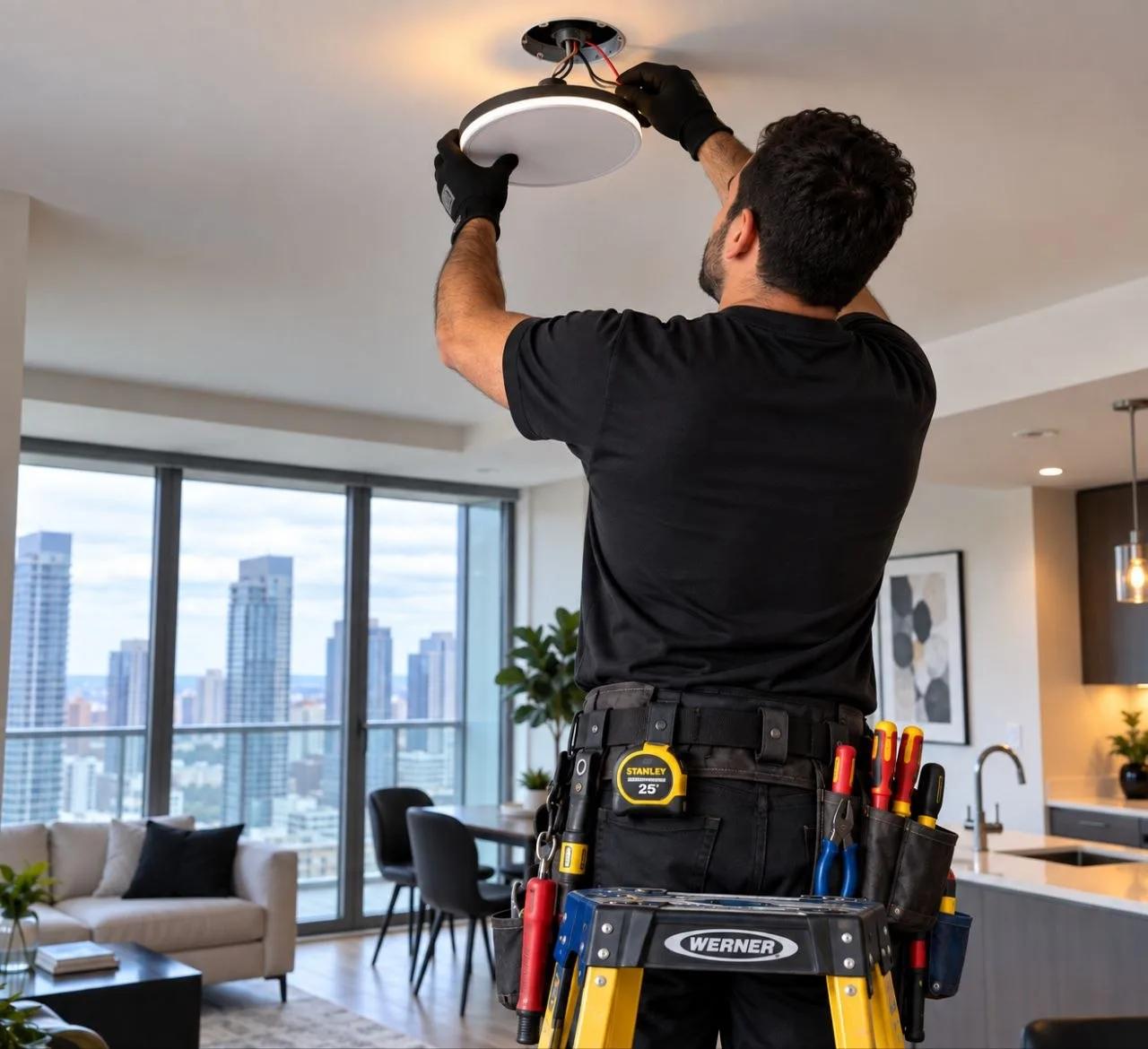
| 3. Commercial LED & 347V Lighting | Office grids, showrooms, parking garages, retail stores, warehouses. | High-efficiency LED troffers, 0–10V dimming systems, dusk-to-dawn exterior signage/parking lot photocells, and high-bay warehouse LED retrofits. |
| 4. Life Safety & Egress Systems | Restaurants, condos, retail units, daycares, healthcare clinics. | Hardwired battery-backup emergency lights, illuminated LED exit signs, and commercial fire alarm installation & interlocking. |
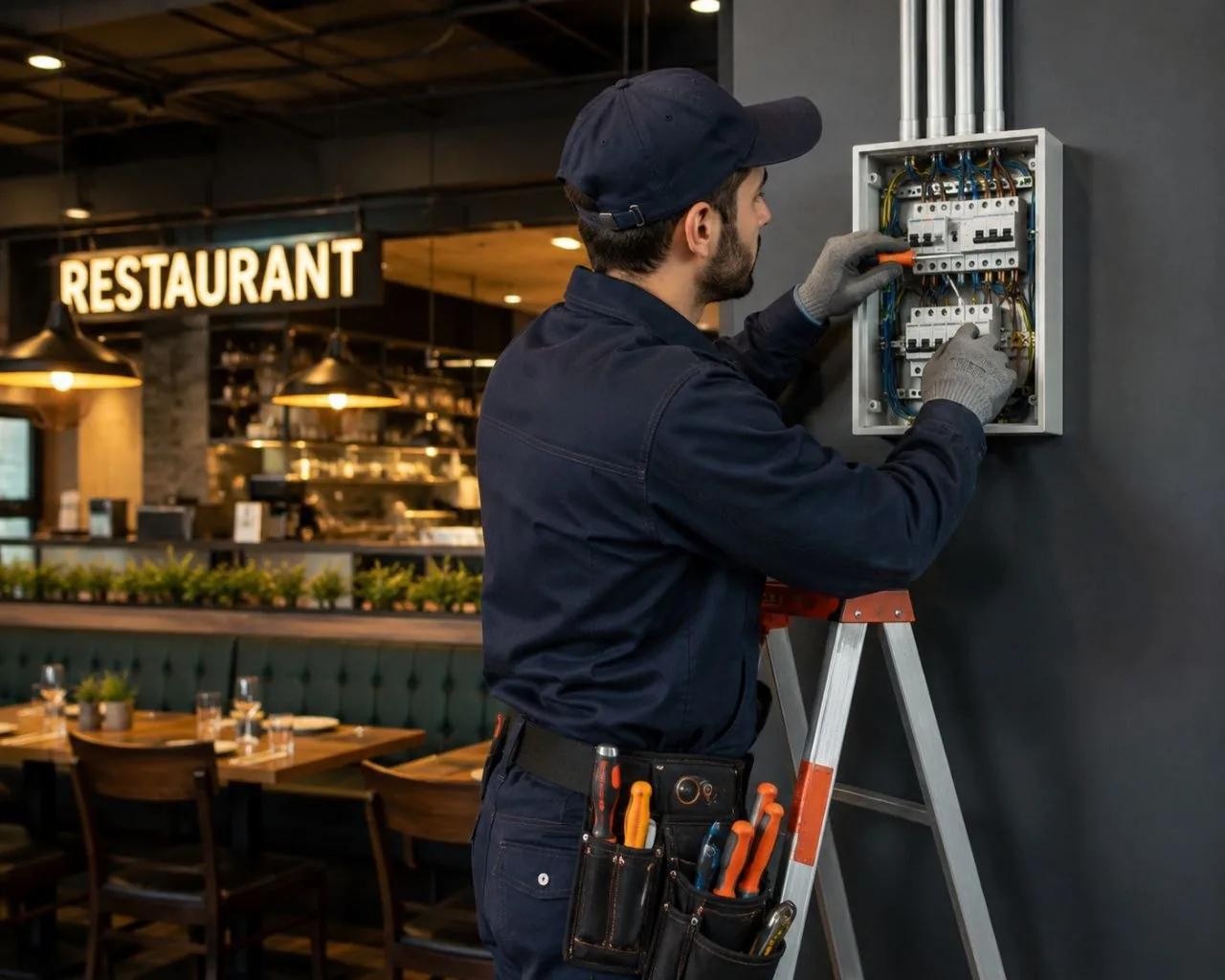
| 5. Commercial Kitchen & HVAC Power | Restaurants, bakeries, cafes, food processing spaces. | Makeup air unit interlocks, 208V/240V three-phase range/fryer feeders, rooftop HVAC disconnects, and specialized restaurant electrical code setups. |
2. The Commercial Tenant Fit-Out Checklist: Before You Sign a Lease
One of the costliest mistakes business owners make is signing a 5-year commercial lease for a "vanilla shell" or converted space before confirming whether the existing electrical panel can power their business.
Upgrading a commercial unit's main service from 100A single-phase to 200A or 400A three-phase after signing can require landlord structural approval, utility vault coordination, and weeks of trenching or riser work.
Five Electrical Checks to Run Before Signing Your GTA Lease:
- Verify Incoming Voltage & Phase: Does the unit provide 120/208V 3-phase (essential for most commercial espresso machines, convection ovens, large HVAC rooftop units, and medical imaging gear) or only 120/240V single-phase?
- Confirm Available Amperage & Breaker Space: Check the main disconnect amperage rating and ask a licensed contractor to perform a load calculation against your equipment spec sheets.
- Locate the Landlord Main Electrical Room: In multi-tenant malls and condo retail units, modifying feeders in shared electrical rooms requires formal building management approval—similar to the governance rules outlined in our condo electrical work guide.
- Inspect Existing Lighting Voltage: Many GTA commercial plazas run overhead troffers at 347 volts, while wall outlets run at 120 volts. Buying 120V residential fixtures for a 347V ceiling grid will destroy the drivers immediately upon energization.
- Audit Emergency Lighting & Fire Alarm Tie-Ins: Confirm whether the existing fire alarm annunciator/horn strobes and exit signs match your planned floorplan partitions so you pass City Building Inspector occupancy sign-off.
If you are opening a food-service business, review our dedicated compliance guide on restaurant electrical code requirements in Ontario before finalizing kitchen layouts.
Planning a Commercial Fit-Out or Upgrade in the GTA?
Avoid costly lease surprises and occupancy delays. Have a Licensed Master Electrician (ECRA/ESA #7017240) audit your commercial panel capacity, 3-phase availability, and permit scope before construction starts.
3. ESA Commercial Permits, Drawings & Ontario Fire Code Compliance
Commercial businesses in Ontario answer to three overlapping regulatory authorities: the Electrical Safety Authority (ESA), your Local Municipal Building Department, and the Municipal Fire Prevention Office.
| Regulatory Requirement | Governing Authority | When It Applies & Why It Matters |
|---|---|---|
| ESA Notification of Work (Permit) | Electrical Safety Authority (O. Reg. 570/05) | Mandatory for every new commercial circuit, panel swap, sign circuit, transformer, or lighting retrofit. Must be filed by a Licensed Electrical Contractor. |
| Engineered Electrical Drawings | Municipal Building Dept. & OESC | Required when filing commercial Building Permits for tenant build-outs, change-of-use occupancy permits, or service upgrades exceeding code thresholds. |
| Ontario Fire Code Logs (Sec. 2.7) | Local Fire Services (Toronto Fire, etc.) | Requires monthly functional tests and annual full-duration battery discharge checks on all emergency lighting and exit signage, documented in an on-site logbook. |
| Commercial Insurance Compliance | Commercial Property Insurers | Underwriters routinely request recent ESA Certificates of Acceptance and infrared thermal inspection reports before renewing commercial policies. |
For a broader overview of how provincial electrical inspections work across commercial and industrial properties, see our Complete Guide to ESA Electrical Inspections in Ontario, as well as our breakdown of fire alarm code requirements in Ontario.
4. Preventive Commercial Maintenance, Thermal Imaging & Zero Downtime
Waiting for a main breaker to trip or a transformer to burn out during peak business hours is the most expensive way to manage a commercial facility. An unplanned outage halts point-of-sale terminals, spoils refrigerated inventory, shuts down HVAC, and forces staff send-homes.
Through structured commercial electrical maintenance plans, property managers and business owners shift from costly emergency callouts to scheduled preventive care:
Key Diagnostics Included in Annual Commercial Maintenance:
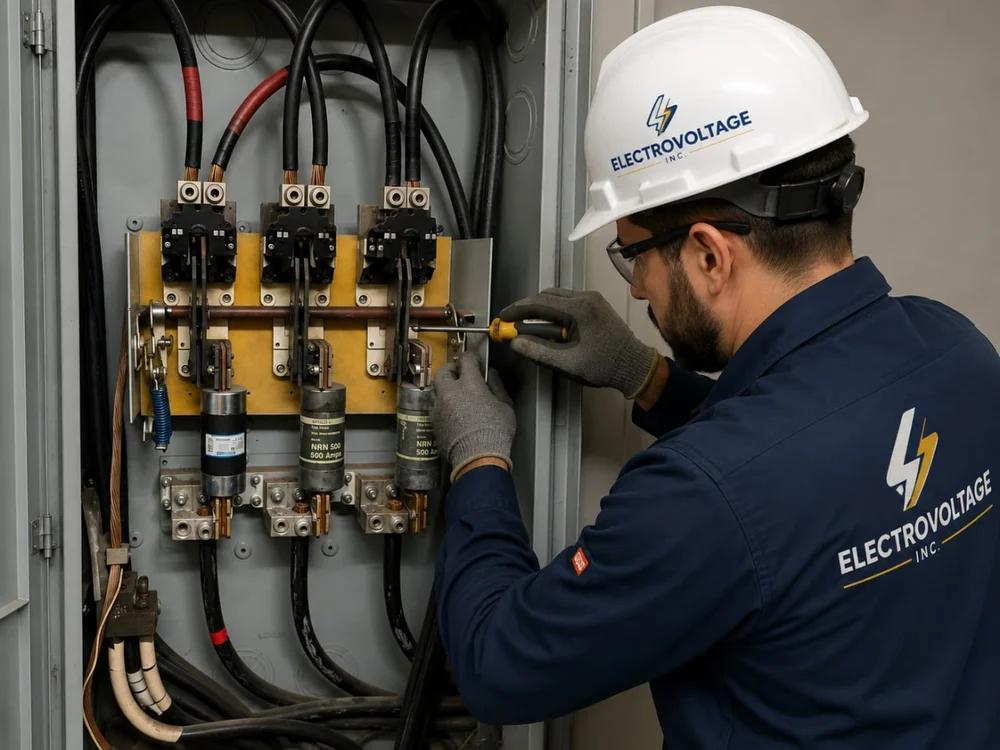
- Infrared Thermal Imaging (Thermography): Using calibrated FLIR cameras on live switchgear, splitters, and distribution panels reveals loose lugs, overloaded neutral bars, and failing breaker stabs weeks or months before an arc-flash failure occurs.
- Torque Verification & Panel Directory Updates: Re-torquing main bus connections and building accurate circuit directories so faults can be isolated in minutes rather than hours.
- GFCI, AFCI & Emergency Lighting Audits: Systematic testing of commercial washroom/kitchen GFCIs, exterior parking lot timers, and battery backup egress units.
- After-Hours Shutdown Coordination: For manufacturing lines, warehouses, and busy corporate offices, see how we plan zero-disruption cutovers in planning industrial electrical upgrades around downtime and our warehouse electrical systems downtime guide.
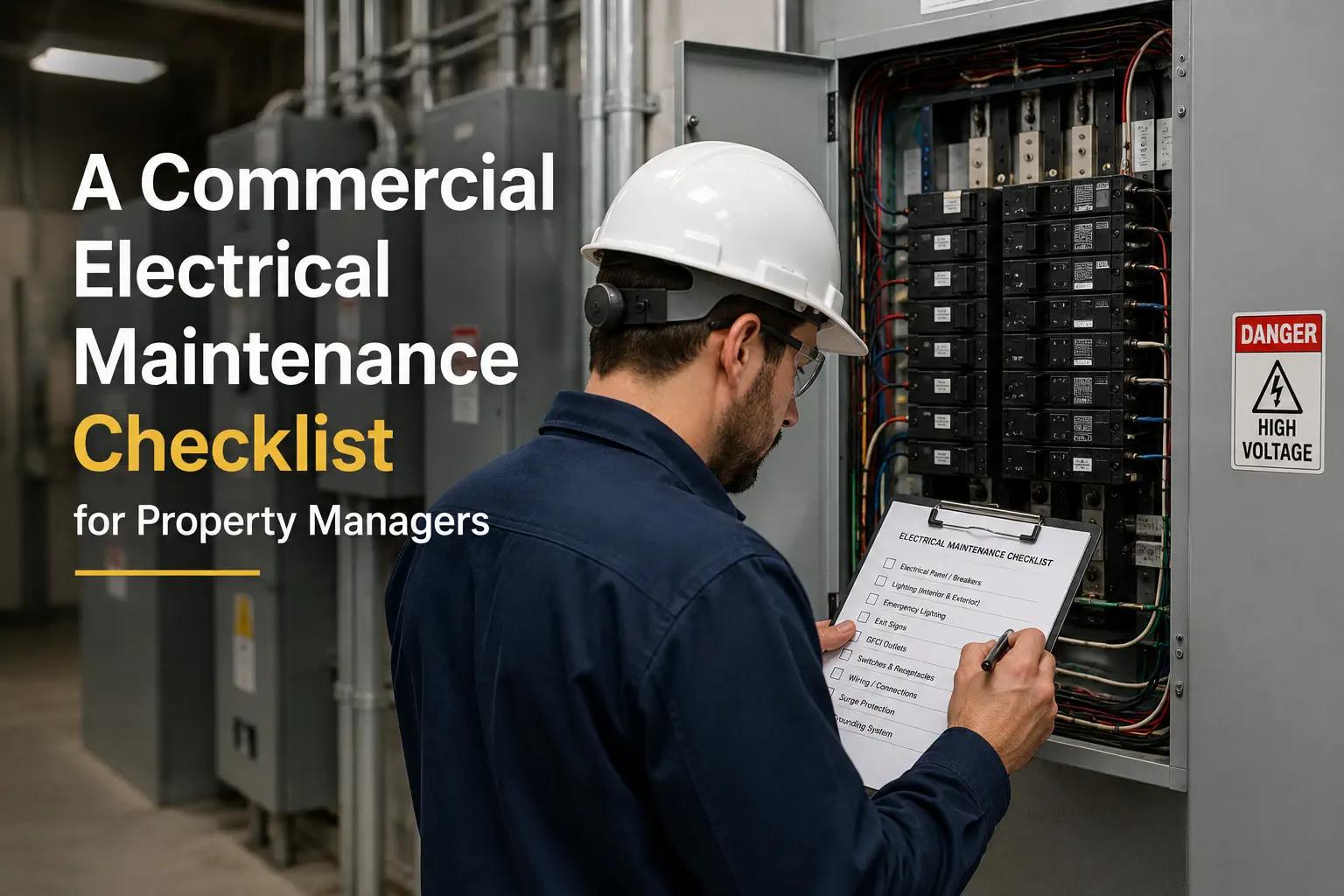
For day-to-day inspection items property teams should track between annual contractor visits, bookmark our Commercial Electrical Maintenance Checklist and our guide to condo electrical maintenance agreements in Ontario.
5. Bridging Commercial, Warehouse & Industrial Power Needs
Many growing GTA businesses outgrow standard office plazas and expand into light industrial units, distribution hubs, or high-bay warehouses. Depending on your facility classification, Electrovoltage connects your commercial build directly with specialized divisions:
- Warehouse & Logistics Facilities: Dedicated loading dock leveler circuits, forklift charging stations, and energy-saving LED high-bay lighting retrofits supported by our warehouse electrician team.
- Manufacturing & Machine Shops: Heavy 600V three-phase machinery drops, CNC feeders, motor starter panels, and PLC control upgrades handled by our industrial electrician division.
- Multi-Unit Commercial & Condo Properties: Shared riser maintenance, EV charging infrastructure for tenant parking, and reserve fund project execution through our condo electrical services.
6. What Determines Your Commercial Electrical Scope?
Because commercial buildings vary widely in ceiling construction, voltage architecture, and municipal permitting rules, reliable commercial electrical contractors never issue blind flat-rate phone quotes. We evaluate five site factors during an on-site walkthrough:
| Commercial Site Factor | Engineering & Schedule Impact |
|---|---|
| Voltage Architecture (208V vs. 600V) | Determines breaker series, wire insulation ratings, step-down transformer requirements, and arc-flash PPE precautions. |
| Ceiling Height & Conduit Access | High open-deck warehouses require scissor lifts for EMT conduit runs, whereas T-bar drop ceilings require plenum-rated cabling and fixture seismic support wires. |
| Occupancy Classification & Permits | Restaurants, assembly spaces, and medical facilities carry strict Fire Code interlocking, isolated ground receptacles, and stamped drawing rules. |
| Operational Phasing (Day vs. Night Shift) | Scheduling work overnight or on weekends keeps retail stores, clinics, and offices fully open during business hours. |
| Landlord & Base-Building Rules | Malls and Class-A office towers often require after-hours security escorts, specific freight elevator bookings, and Certificates of Insurance naming the property manager. |
Schedule an On-Site Commercial Electrical Walkthrough
Need a licensed commercial electrician for a tenant build-out, 3-phase upgrade, emergency lighting audit, or maintenance contract? Speak directly with our Master Electricians today.
7. Serving Commercial Business Corridors Across Toronto & the GTA
Electrovoltage dispatches fully stocked commercial service vans, scissor-lift certified technicians, and Master Electricians across every major GTA business district:
- Vaughan & Concord Commercial Corridor: Highway 7 retail plazas, industrial/commercial office parks, 600V machinery drops, and tenant fit-outs.
- Markham & Highway 404 Tech Hub: Corporate office lighting controls, server room UPS power, and 3-phase panel expansions.
- Toronto & Downtown Core: Street-level retail build-outs, restaurant hood interlocks, and heritage commercial retrofits.
- Mississauga Airport & Dixie Corridors: Logistics office build-outs, commercial kitchen wiring, and thermal imaging maintenance plans.
- Richmond Hill & Yonge Street: Medical/dental clinic rough-ins, commercial plaza signage circuits, and Fire Code emergency lighting.
- Etobicoke & Queensway Business Parks: Automotive/service bay 240V/600V drops, panel upgrades, and annual ESA compliance checks.
Partner with a Licensed Commercial Electrical Contractor
From initial blueprint review and ESA permit filing to overnight panel cutovers and ongoing maintenance logs, Electrovoltage delivers reliable, code-compliant commercial electrical engineering for businesses across Toronto and the GTA.
Call (416) 828-6976 or submit your project plans online to arrange a commercial site walkthrough and written proposal.