July 12, 2026
Call (416) 828-6976Fire Alarm Code Requirements Every Property Owner Should Know
Related Service
Smoke & CO Alarm Installation
Protect your property with code-compliant fire alarm systems and monitoring.
On this page
- Residential Requirements
- Multi-Residential and Commercial Buildings
- Who's Responsible for Compliance?
- What an Inspection Involves
- How Often to Test and Replace Alarms
- Hardwired, Battery or Interconnected
- Common Mistakes We See
- Standalone Alarms or a Full Fire Alarm System?
- Get Your System Installed or Inspected
Fire alarm requirements catch a lot of homeowners and property managers off guard. The rules differ depending on the type of property, and they're not optional. Here's a plain-language overview.
Residential Requirements
Ontario's Fire Code requires working smoke alarms on every storey of a home and outside all sleeping areas, plus carbon monoxide alarms near sleeping areas in homes with fuel-burning appliances or an attached garage. Interconnected smoke alarms (where one going off triggers all of them) are required in newer construction and strongly recommended everywhere else.
Multi-Residential and Commercial Buildings
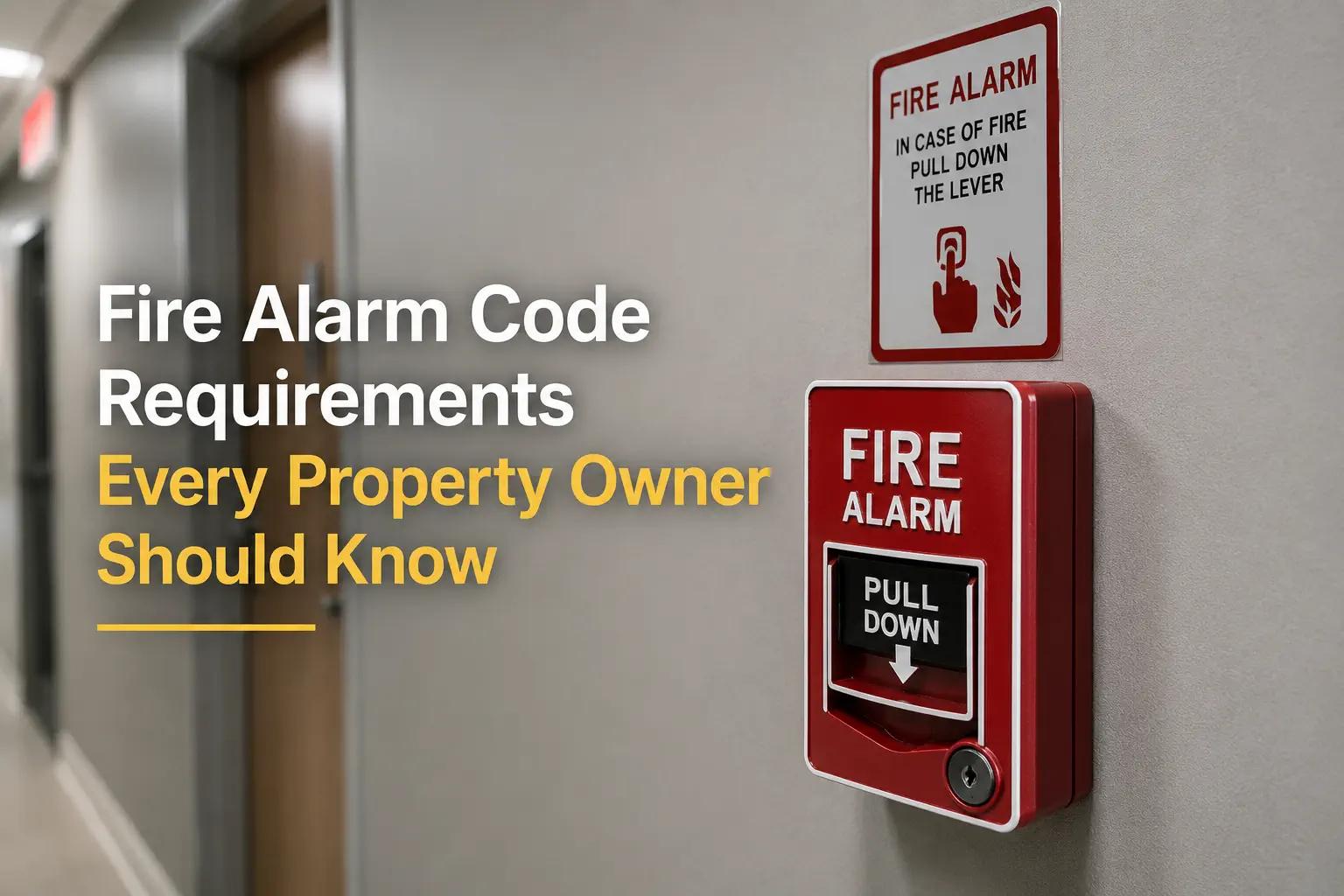
Apartment buildings, condos, offices, and retail properties fall under stricter requirements, typically including a full fire alarm system with pull stations, horns/strobes, and often a connection to a monitoring service or the fire department. These systems require regular inspection and testing, usually annually at minimum, with records kept on file for fire inspectors.
Who's Responsible for Compliance?
For rental properties and commercial buildings, the property owner or manager is responsible for ensuring the fire alarm system is installed, functional, and inspected on schedule. Non-compliance can result in fire code violations, fines, and, far more importantly, real safety risk to occupants.
What an Inspection Involves
A fire alarm inspection tests every device on the system (detectors, pull stations, horns/strobes), verifies the control panel and backup battery, and confirms any monitoring connection is working. We provide detailed inspection reports so you have documentation on hand if a fire inspector asks for it.
How Often to Test and Replace Alarms
Smoke and carbon monoxide alarms only protect you if they work. Test them every month using the test button, and replace batteries in battery-powered units at least once a year or whenever the unit chirps. Alarms also expire: look for the manufacture or replace-by date printed on the back. Smoke alarms are generally replaced after about 10 years, and CO alarms have their own, often shorter, expiry date set by the manufacturer. An alarm past its date should be replaced even if the test button still sounds.
Hardwired, Battery or Interconnected
Hardwired alarms run on house power with a battery backup, so they keep working during an outage. Interconnected alarms (wired or wireless) all sound together, which matters most when a fire starts in the basement and you are asleep upstairs. Adding hardwired devices or new circuits is electrical work, so it should be done by a licensed contractor and, where required, notified to the Electrical Safety Authority (ESA). Swapping a battery-only alarm for another battery-only alarm is the one job a homeowner can do themselves.
Common Mistakes We See
- Alarms painted over, covered with tape or removed because of nuisance alarms near the kitchen or a bathroom.
- Expired units left on the ceiling because they still beep when tested.
- Mixed brands that cannot interconnect, so only one alarm sounds.
- Rental or commercial properties with no written test record, which is the first thing a fire inspector asks for.
Nuisance alarms near a kitchen are usually a placement problem. Moving the alarm or switching to a photoelectric model fixes it without disabling the alarm.
Standalone Alarms or a Full Fire Alarm System?
Single-family homes are normally covered by smoke and CO alarms. Larger or multi-unit buildings, and many commercial occupancies, need a full fire alarm system. Which one applies depends on the building size, its use and the Fire Code and Building Code requirements, so confirm with your local fire prevention office or the building's consulting engineer before you buy equipment. We install and test to the requirements you confirm, and we document the results. For commercial buildings, our commercial electrical maintenance checklist shows how to schedule these tests.
Related reading: Sound System Installation: What to Expect · Security Alarm Installation: The Wiring and Power Decisions Behind a Reliable System
Get Your System Installed or Inspected
We design, install, and inspect fire alarm systems for homes, rental properties, and commercial buildings across Toronto and the GTA. Contact us to schedule an installation or inspection.