July 12, 2026
Call (416) 828-6976How to Choose the Right EV Charger for Your Home
Related Service
EV Charger Installation
Professional EV charger installation for homes and businesses.
On this page
- Level 1 vs. Level 2 Charging
- Does Your Panel Have Enough Capacity?
- Permits and Inspection
- Choosing a Charger and Location
- Plug-In or Hardwired?
- Understanding the Amp Numbers
- Smart Features and Load Management
- Cold Weather and Outdoor Installations
- Condos, Townhouses and Shared Parking
- Ready to Install a Home EV Charger?
More drivers across Toronto and the GTA are switching to electric vehicles, and most quickly discover that the charging cable that came with the car is painfully slow for daily use. Here's what to consider before installing a home charger.
Level 1 vs. Level 2 Charging
The cable that ships with most EVs plugs into a standard 120V outlet (Level 1) and can take 24+ hours for a full charge. A Level 2 charger runs on a 240V circuit (the same type used for a dryer or stove) and can fully charge most EVs overnight in 4–8 hours. For daily driving, Level 2 is the practical choice for almost every homeowner.
Does Your Panel Have Enough Capacity?
A Level 2 charger draws a significant, continuous electrical load, often 30–50 amps. Before installing one, an electrician needs to confirm your panel has enough spare capacity, especially if you also have electric heating, a hot tub, or other high-draw appliances. If capacity is tight, a panel upgrade may be the more cost-effective long-term fix rather than limiting your charger's output.
Permits and Inspection
In Ontario, EV charger installations require an electrical permit and an ESA inspection. This isn't optional, and skipping it can cause problems with insurance or resale. A licensed electrician handles the permit and inspection as part of the installation, so you're left with proper documentation.
Choosing a Charger and Location
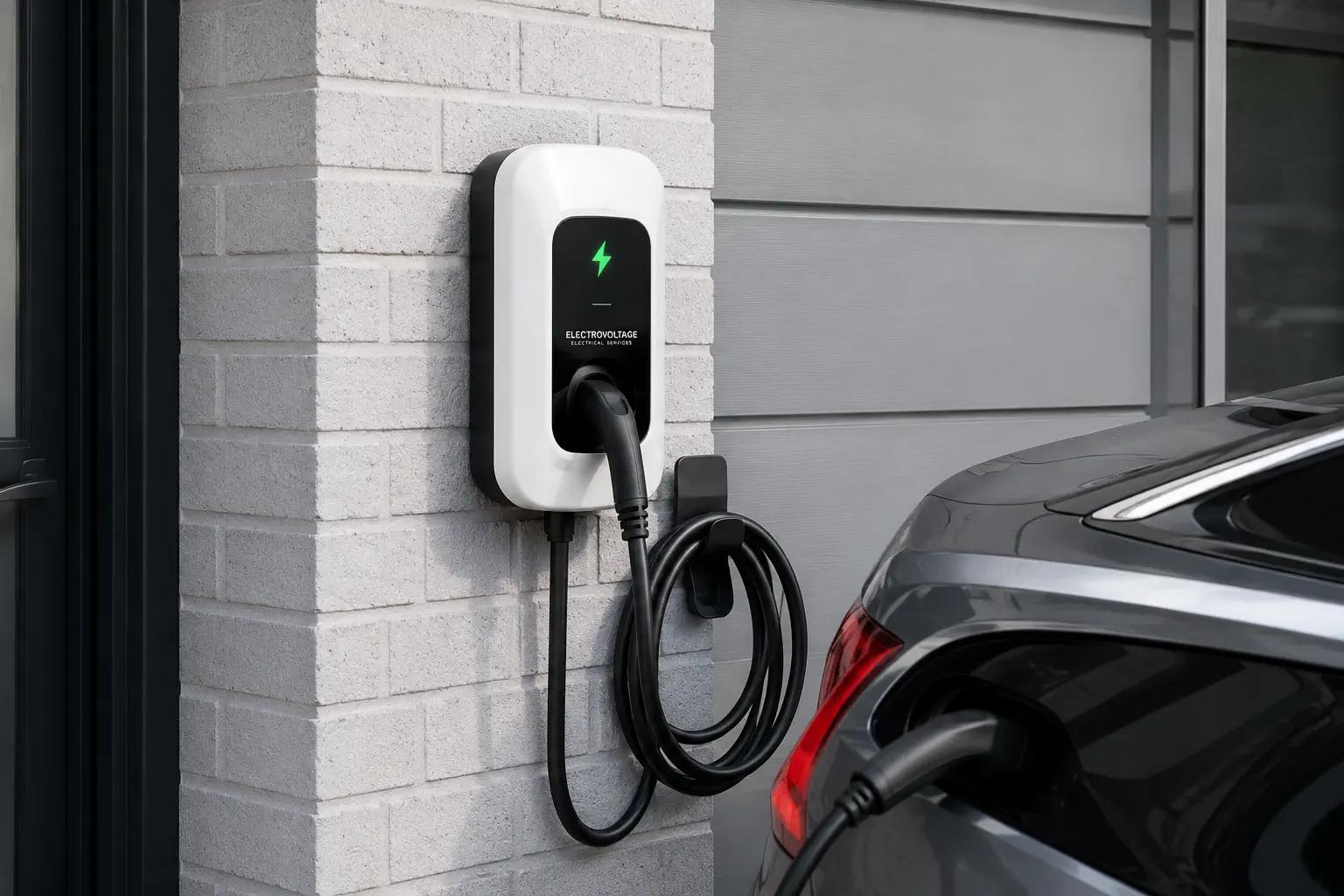
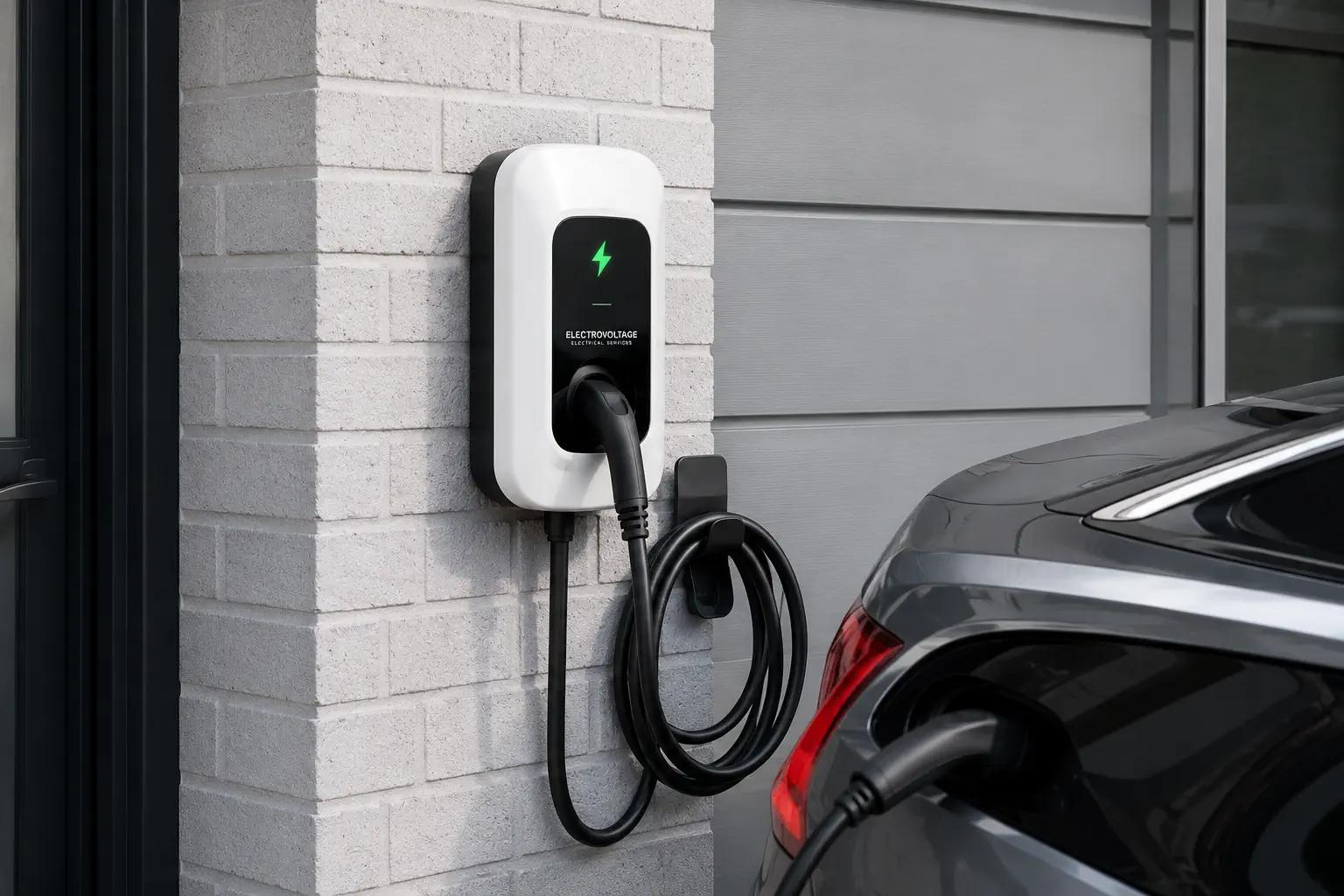
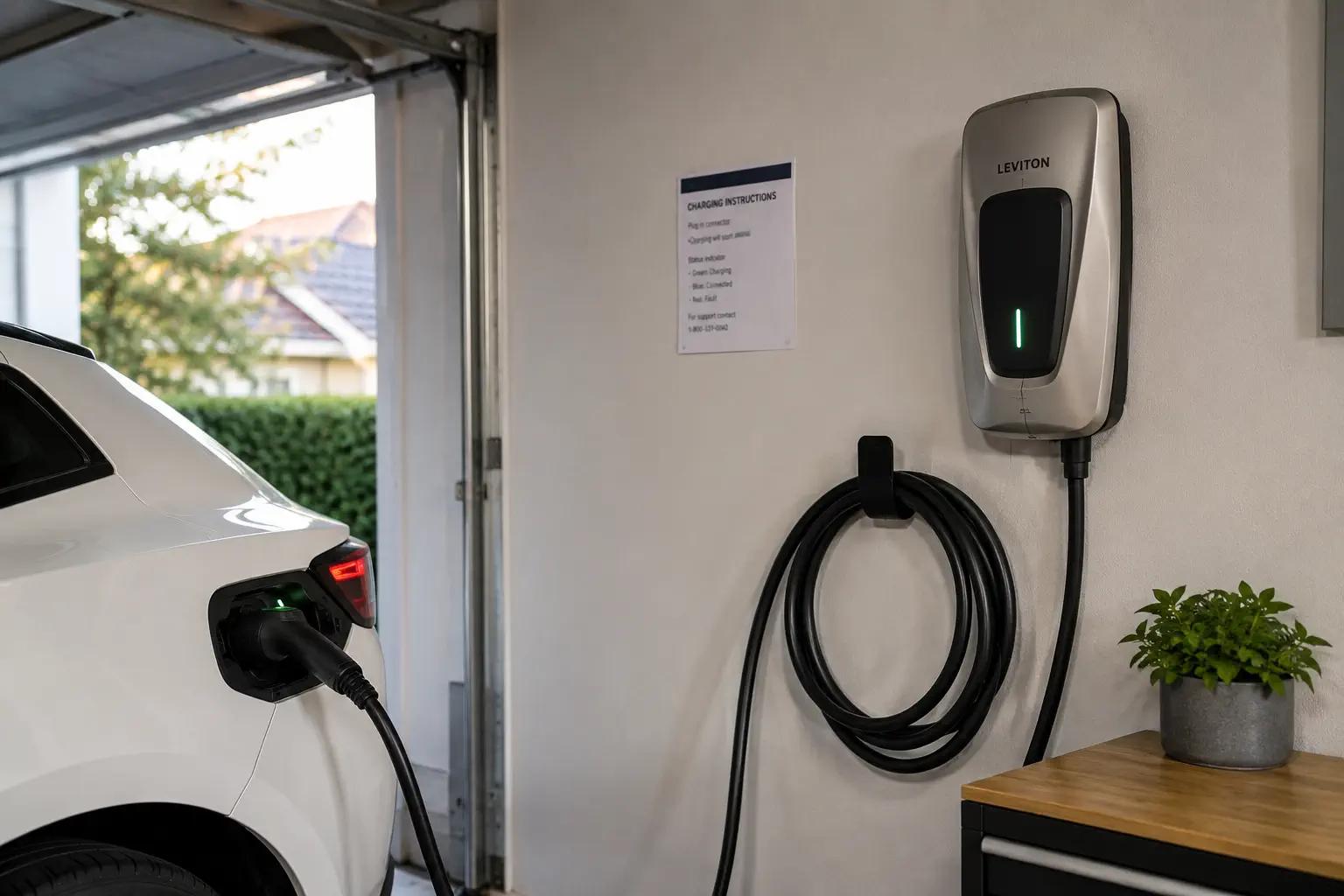
Most major EV brands work with universal Level 2 chargers, though some drivers prefer their manufacturer's own unit for app integration. We help clients pick hardware that fits their vehicle, garage layout, and budget, then run the dedicated circuit and mount the charger in the right spot: close enough to reach the charging port without stretching the cable across a walkway.
Plug-In or Hardwired?
Many Level 2 chargers can be installed either way. A plug-in unit uses a 240V receptacle (commonly a 14-50 outlet), which makes it easy to remove or replace the charger later. A hardwired unit connects directly to the circuit, with no receptacle that can wear or loosen under constant high current. Hardwiring is often preferred for a permanent garage installation, and it is the better option for high-amperage chargers. A plug-in setup suits renters and people who may take the charger with them. Either way, the receptacle or circuit must be rated for continuous use.
Understanding the Amp Numbers
An EV charger is a continuous load, so the circuit has to be sized with extra margin above the charger's output.
| Charger output | Typical breaker size |
|---|---|
| 32A | 40A |
| 40A | 50A |
| 48A | 60A |
A higher output does not help if your car's onboard charger cannot accept it. Check the vehicle's maximum AC charging rate and buy a charger that matches. Overbuying costs more without charging any faster. If the numbers push your panel to its limit, read upgrading from 100A to 200A in Ontario.
Smart Features and Load Management
Wi-Fi chargers can schedule charging for off-peak hours, track energy use and share data with an app. If your panel is close to its limit, an energy management device can balance the charger against the rest of the house so you do not need a bigger service. Ask your electrician whether this applies to your home before assuming you need a panel upgrade.
Cold Weather and Outdoor Installations
GTA winters affect both the car and the equipment. Choose a charger with an enclosure rated for outdoor use if it is not inside a garage, and plan the cable so it is not pulled across a snowy path. A charger on an attached garage wall is the most convenient setup for most households.
Condos, Townhouses and Shared Parking
Condo owners usually need board approval and a plan for metering the energy used. Our guide to EV charger installation in Toronto condos walks through the steps. Government and utility incentive programs change over time, so check the current rules before you buy hardware or sign a quote.
Related reading: Home EV Charger Installation in Ontario: Requirements, Panel Capacity & ESA Permits · EV Charger Installation in Toronto Condos: What Your Condo Board Can (and Can't) Say No To
Ready to Install a Home EV Charger?
Our licensed electricians provide EV charger installation for homes and condos across Toronto and the GTA, including dedicated local crews for EV charger installation in Markham, EV charger installation in Vaughan, and East Gwillimbury, with panel assessments, ESA permits, and inspection handled end-to-end. Contact us for a free quote.