November 24, 2026
Call (416) 828-6976Buying a House with Aluminum Wiring in Ontario: Safety Risks, Insurance Rules & AlumiConn Remediation
Related Service
Aluminum Wiring Replacement
Aluminum wiring repair and replacement to reduce fire risk and meet insurance requirements.
On this page
- 1. The Aluminum Wiring Era in Ontario (1965 – 1976)
- 2. The Metallurgy of Failure: Why Do Aluminum Connections Overheat?
- 3. Ontario Home Insurance Ultimata: What Insurers Demand
- 4. Remediation Options: What Works, What Fails, and What Is Dangerous
- 5. The Professional AlumiConn Remediation Process
- 6. What Factors Determine Your Project Scope? (Why Custom Quotes Are Mandatory)
- 7. Serving North York, Toronto and the Entire Greater Toronto Area (GTA)
- Protect Your Investment with Complete Confidence
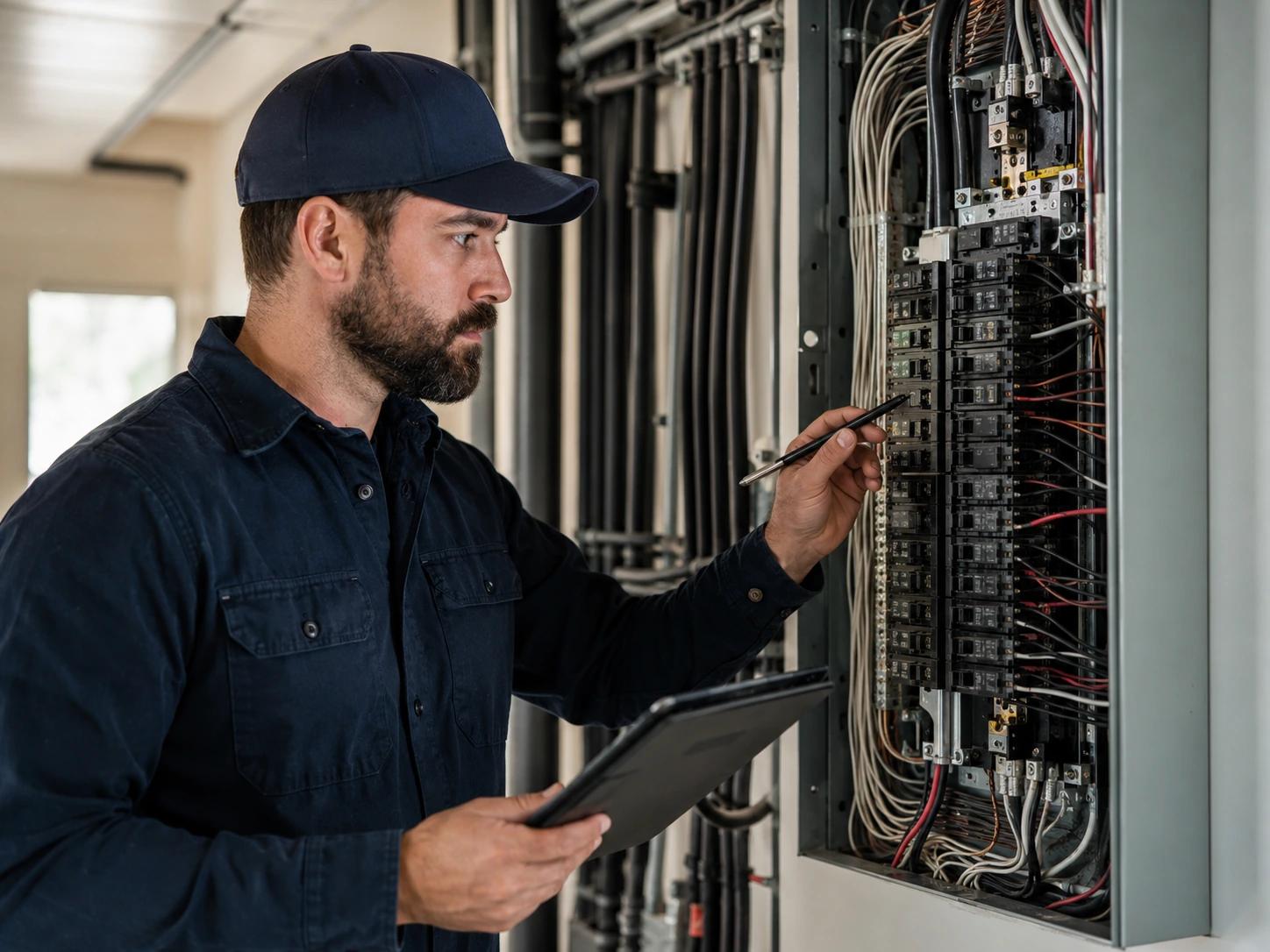
If you are currently shopping for a home across Toronto, North York, Etobicoke, Scarborough, or Mississauga, you have likely encountered a common scenario in older suburban neighborhoods: the home inspector opens the electrical panel, unscrews a wall outlet, and flags the presence of single-strand aluminum branch wiring.
For first-time homebuyers and property investors, this discovery often triggers immediate panic.
Online forums are filled with horror stories about catastrophic electrical fires, uninsurable properties, and costly contractor estimates demanding that all interior drywall be torn down for a complete house rewire. Furthermore, mortgage lenders routinely condition loan approvals on securing unconditional home insurance binders—which many Ontario insurers immediately withhold upon learning that a property contains aluminum branch circuits.
Should you walk away from the property? Is a full house rewire truly mandatory? And what does your insurance company actually require to issue coverage?
The short answer: You do not need to walk away from your dream home, and you almost certainly do not need to tear your walls apart for a full rewire.
This definitive guide breaks down everything Ontario buyers, sellers, and homeowners must know about aluminum wiring: the metallurgy of why connections fail, Ontario home insurance mandates, dangerous shortcut fixes to avoid, how AlumiConn pigtailing permanently resolves safety risks, ESA inspection requirements, and how to get an accurate on-site assessment from a Licensed Electrical Contractor (LEC).
1. The Aluminum Wiring Era in Ontario (1965 – 1976)
To understand why aluminum wiring exists in so many GTA homes, you have to look back to the mid-1960s.
During the Vietnam War era, a severe global copper shortage caused raw copper commodity prices to skyrocket. To maintain momentum in the booming post-war residential housing market, residential homebuilders and electrical contractors across North America turned to aluminum conductor wiring as an affordable, readily available alternative.
Between roughly 1965 and 1976, hundreds of thousands of single-family subdivisions, townhomes, and low-rise multi-family buildings across Southern Ontario were wired using single-strand 15-amp (#12 AWG) and 20-amp (#10 AWG) aluminum branch circuits.
GTA Neighborhoods Where Aluminum Wiring Is Most Prevalent:
- North York: Expansive 1960s subdivisions in Don Mills, Willowdale, Newtonbrook, Bayview Village, and Bathurst Manor.
- Etobicoke: Mid-century homes throughout Markland Wood, Alderwood, Richview, and Princess-Rosethorn.
- Scarborough: Thousands of brick bungalows and side-splits in Agincourt, Woburn, Wexford, and West Hill.
- Mississauga: Early suburban developments across Clarkson, Applewood, Lakeview, and Streetsville.
- Markham & Richmond Hill: Established mature residential enclaves constructed during the early 1970s.
By the late 1970s, as building codes evolved and the unique physical properties of aluminum connections became clear, single-strand aluminum was phased out for residential 15A branch circuits, returning exclusively to copper.
Today, heavy aluminum conductors are still safely used for main service entrance lines, subpanel feeders, and commercial switchgear—where heavy mechanical lugs and anti-oxidants are standard. The safety issue is strictly confined to single-strand branch wiring serving everyday household switches, receptacles, and lighting circuits.
2. The Metallurgy of Failure: Why Do Aluminum Connections Overheat?
A widespread misconception among homeowners is that aluminum wire itself is defective, brittle, or inherently combustible.
The wire inside the wall is not the problem. Electric current flows through aluminum metal safely without catching fire. The catastrophic failure point occurs exclusively at the connection points (terminations)—where the aluminum wire connects to screw terminals on switches, wall outlets, light fixtures, and breaker terminals.
Aluminum behaves fundamentally differently from copper across four critical metallurgical properties:
| Physical & Metallurgical Property | Copper Conductor | Aluminum Conductor | Operational & Safety Impact |
|---|---|---|---|
| Thermal Expansion Coefficient | Low thermal movement under load. | Expands ~30% to 40% more than copper when carrying current. | Each time an appliance cycles on, the wire heats up and expands; when turned off, it cools and contracts. Over years, this "thermal cycling" gradually pushes the wire out from under terminal screws, creating loose gaps. |
| Creep & Cold Flow | Resists permanent deformation under screw torque. | Highly susceptible to mechanical creep. | Under constant screw pressure inside a receptacle, aluminum slowly deforms, thins, and relaxes its tension, turning a tightly torqued connection into a dangerously loose joint. |
| Oxidation Characteristics | Copper oxide remains electrically conductive. | Aluminum oxide is a non-conductive electrical insulator. | When exposed to ambient oxygen, aluminum instantly forms a microscopic oxide film. Unlike copper oxide, aluminum oxide creates severe electrical resistance. High resistance + heavy electrical current = extreme heat generation. |
| Galvanic Corrosion | Compatible with standard brass terminal screws. | Severe electrochemical reaction with brass/steel. | In the presence of ambient humidity, direct contact between raw aluminum and standard brass screws causes galvanic corrosion, eroding the metal contacts and accelerating arcing. |
The "Chain Reaction" of Electrical Arcing
When thermal expansion, cold creep, oxidation, and galvanic corrosion combine over decades, a dangerous chain reaction unfolds inside your walls:
| Hazardous Failure Stage | Physical Phenomenon Occurring Inside Junction Box | Safety Risk Level |
|---|---|---|
| Stage 1: Mechanical Loosening | Thermal expansion and cold creep create microscopic gaps between wire and terminal screw. | Initial warning sign |
| Stage 2: Severe Resistance | Ambient oxygen oxidizes bare aluminum, forming a non-conductive insulating layer. | High resistance |
| Stage 3: Thermal Spikes | Heavy current flowing through resistance generates localized temperatures exceeding 400°C. | Extreme heat |
| Stage 4: Electrical Arcing | Micro-arcing occurs across gaps, charring insulation and melting receptacle plastic faceplates. | Severe fire hazard |
| Stage 5: Structural Ignition | Sustained heat ignites interior drywall paper and dry wooden framing studs inside the wall. | Immediate emergency |
Because electrical current continues to flow through the high-resistance connection, the temperature inside the outlet box can easily exceed 400°C (750°F)—sufficient to melt plastic receptacle faceplates, char drywall paper, and ignite interior wooden studs without ever drawing enough current to trip the circuit breaker in your electrical panel.
3. Ontario Home Insurance Ultimata: What Insurers Demand
If you are purchasing a home with aluminum wiring, your real estate lawyer and mortgage broker will inform you that securing home insurance is a mandatory closing condition.
Major Ontario insurance underwriters—including Intact Insurance, Aviva, Desjardins, CAA Insurance, Wawanesa, Travelers, and TD Insurance—classify aluminum wiring as a high-risk underwriting hazard.
What Happens When an Insurer Identifies Aluminum Wiring?
Depending on the carrier's underwriting guidelines, one of three scenarios occurs:
- Immediate Coverage Denial: The insurer flatly refuses to issue a policy until the entire electrical system is professionally remediated or rewired.
- Conditional 30-Day Binder: The insurer issues a temporary binder allowing you to close your purchase, but demands a certified remediation report from a Licensed Electrical Contractor and an official ESA Certificate of Acceptance within 30 days of closing.
- Prohibitive Surcharges & High Deductibles: Some secondary insurers agree to provide coverage, but impose exorbitant premium surcharges and electrical fire deductibles exceeding several thousand dollars.
Insurance Underwriting Standards Across Ontario:
| Underwriting Requirement | Unlicensed Handyman / Quick Fixes | Electrovoltage Certified Remediation |
|---|---|---|
| ESA Permit & Notification of Work | Cannot legally pull permits | All permits filed prior to work |
| Approved AlumiConn / COPALUM Connectors | Often uses unapproved purple twist-caps | 100% CSA-certified 3-port AlumiConn lugs |
| Calibrated Torque Documentation | Hand-tightened; high failure risk | Torqued with precision inch-pound screwdrivers |
| Official Certificate of Acceptance | None issued; rejected by insurer | Official provincial ESA certificate delivered |
| Insurance Underwriter Approval | 100% Policy Cancellation Risk | 100% Unconditional Insurance Approval |
Buying a Home with Aluminum Wiring in the GTA?
Don't risk delayed mortgage closing or costly wall demolition. Speak directly with a Licensed Master Electrician to review your inspection report or book an on-site AlumiConn remediation audit.
4. Remediation Options: What Works, What Fails, and What Is Dangerous
When faced with aluminum wiring, homeowners have three code-compliant, permanent solutions—along with several dangerous shortcut methods that must be strictly avoided.
| Remediation Method | Engineering Mechanism | When to Choose This Option | Code & Insurance Compliance |
|---|---|---|---|
| 1. AlumiConn 3-Port Lug Pigtailing | Mechanical lug connector with separate isolated ports for aluminum and copper; factory-filled with anti-oxidant gel; torqued with calibrated screwdriver. | The Gold Standard for 90%+ of homes. Permanent, highly cost-effective, and completed without damaging drywall or finished paint. | Fully approved by the ESA (Bulletin 26-21) and universally accepted by all major Ontario insurers. |
| 2. COPALUM Crimp Remediation | Specialized cold-weld crimp sleeve installed using a high-pressure motorized hydraulic crimper; permanently bonds copper pigtail to aluminum. | Effective for tight junction boxes, but requires expensive proprietary tooling and specialized manufacturer licensing. | Approved by ESA and insurers, but less common in Ontario due to tool rental restrictions. |
| 3. Full Copper Rewire | Complete removal and replacement of all aluminum branch cables with modern Romex copper wiring back to the electrical panel. | Recommended only if you are already executing a full down-to-the-studs gut renovation or adding substantial square footage. | 100% code-compliant, but involves massive disruption, plaster cutting, drywall patching, and repainting. |
| 4. "Purple" Twist-On Wire Nuts | Plastic twist caps with internal zinc paste marketed for aluminum-to-copper splicing. | NEVER RECOMMENDED. Documented failure rate; springs loosen over time under thermal cycling. | Widely rejected by Ontario home inspectors, ESA inspectors, and insurance underwriters. |
| 5. CO/ALR Devices Alone | Replacing standard outlets with switches/receptacles marked "CO/ALR" (copper/aluminum rated). | Partial fix only. Does not protect light fixtures, ceiling fans, or hidden junction boxes. | Outdated approach; does not satisfy modern insurer demands for comprehensive pigtailing. |
Why "Purple Marrettes" Are a Dangerous False Economy
Unlicensed handymen often advertise quick, low-cost aluminum wiring fixes by twisting standard wire nuts or specialized "purple" wire nuts onto existing wires.
Independent testing by the U.S. Consumer Product Safety Commission (CPSC) and extensive field reports from the Electrical Safety Authority (ESA) have demonstrated that twist-on wire nuts fail to maintain consistent mechanical pressure over time. Under continuous electrical loads, the internal spring loosens, causing localized overheating, melting, and smoking.
Homeowners who pay for purple wire nut installations routinely discover that their home insurer completely rejects the work, forcing them to pay a second time for professional AlumiConn remediation.
5. The Professional AlumiConn Remediation Process
Code-compliant aluminum wiring remediation is not simply a matter of swapping out a few wall plugs. To pass an ESA inspection and satisfy insurance underwriting requirements, every single electrical junction in your entire home must be individually accessed, prepared, and remediated:
| Remediation Phase | Milestone & Process | Detailed Technical & Inspection Actions |
|---|---|---|
| Phase 1: Home Circuit Audit | Inventory Mapping | Every switch, receptacle, ceiling fixture, and junction box physically located and documented. |
| Phase 2: ESA Permit Filing | Official Notification | Notification of Work filed with the Electrical Safety Authority prior to touching any wiring. |
| Phase 3: Conductor Prep | Oxide Removal & Inspection | Existing conductors inspected for heat fatigue, cleaned, and coated with anti-oxidant compound. |
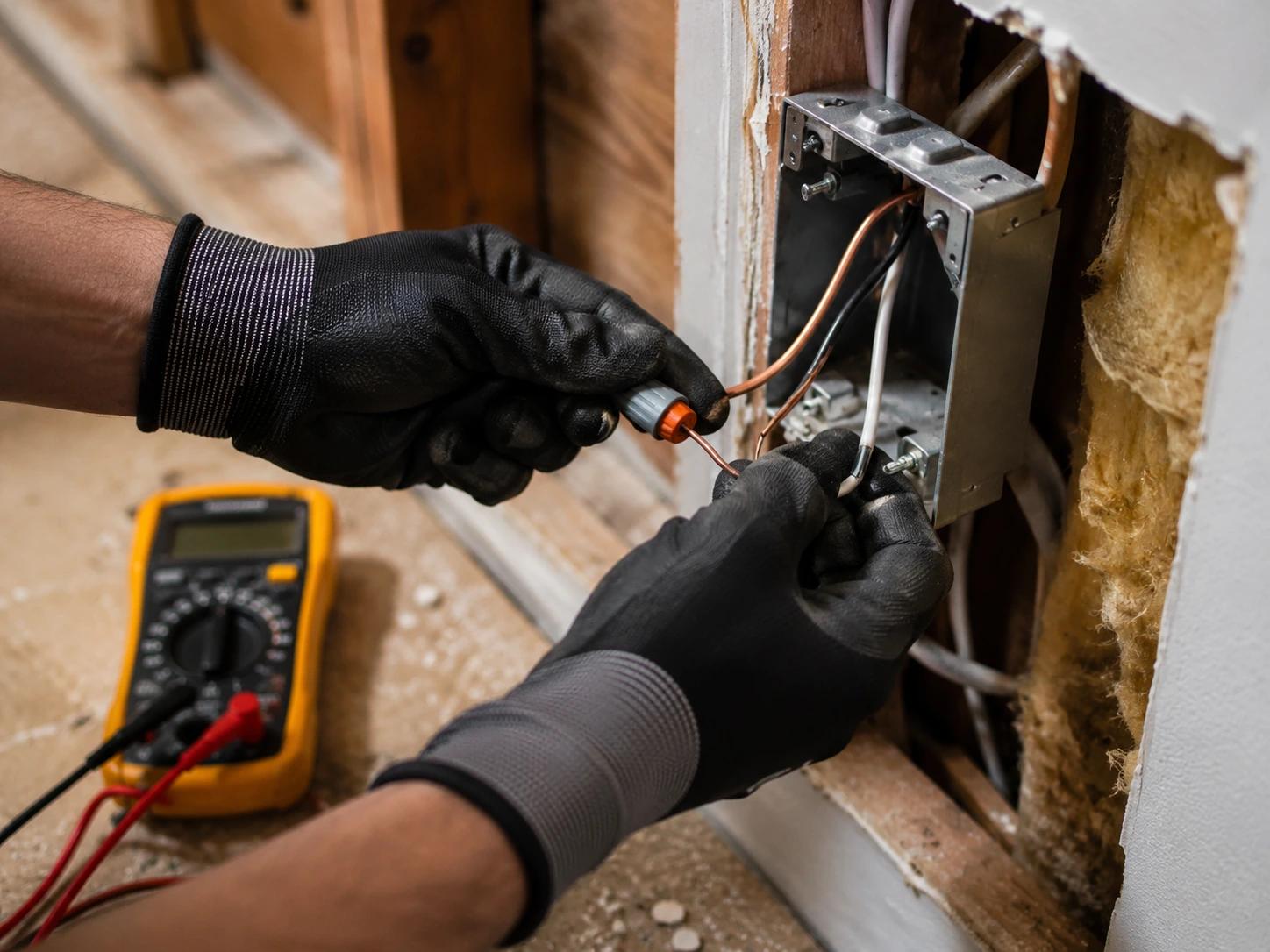
| Phase 4: AlumiConn Pigtailing | Calibrated Torque Terminations | Three-port AlumiConn lugs torqued with calibrated inch-pound screwdrivers to factory specs. |
| Phase 5: Master Panel Inspection | Panel & Neutral Bus Tuning | Breakers, neutral bus bars, and grounding bonds verified, cleaned, and properly torqued. |
| Phase 6: ESA Final Review | Certificate of Acceptance | Provincial ESA Inspector conducts field review and issues official insurance certification. |
Critical Circuit Points Remediated in Every Home:
- Standard Wall Outlets & GFCIs: Every 15A and 20A receptacle across bedrooms, living areas, basements, and kitchens.
- Light Switches & Dimmers: Single-pole, 3-way, and 4-way switches controlling interior and exterior illumination.
- Hardwired Ceiling Light Fixtures: Chandeliers, hallway flush-mounts, and ceiling fans where aluminum wiring connects directly to modern copper fixture leads.
- Kitchen & Bathroom Exhaust Fans: Mechanical ventilation motors where continuous running vibrations accelerate loose connections.
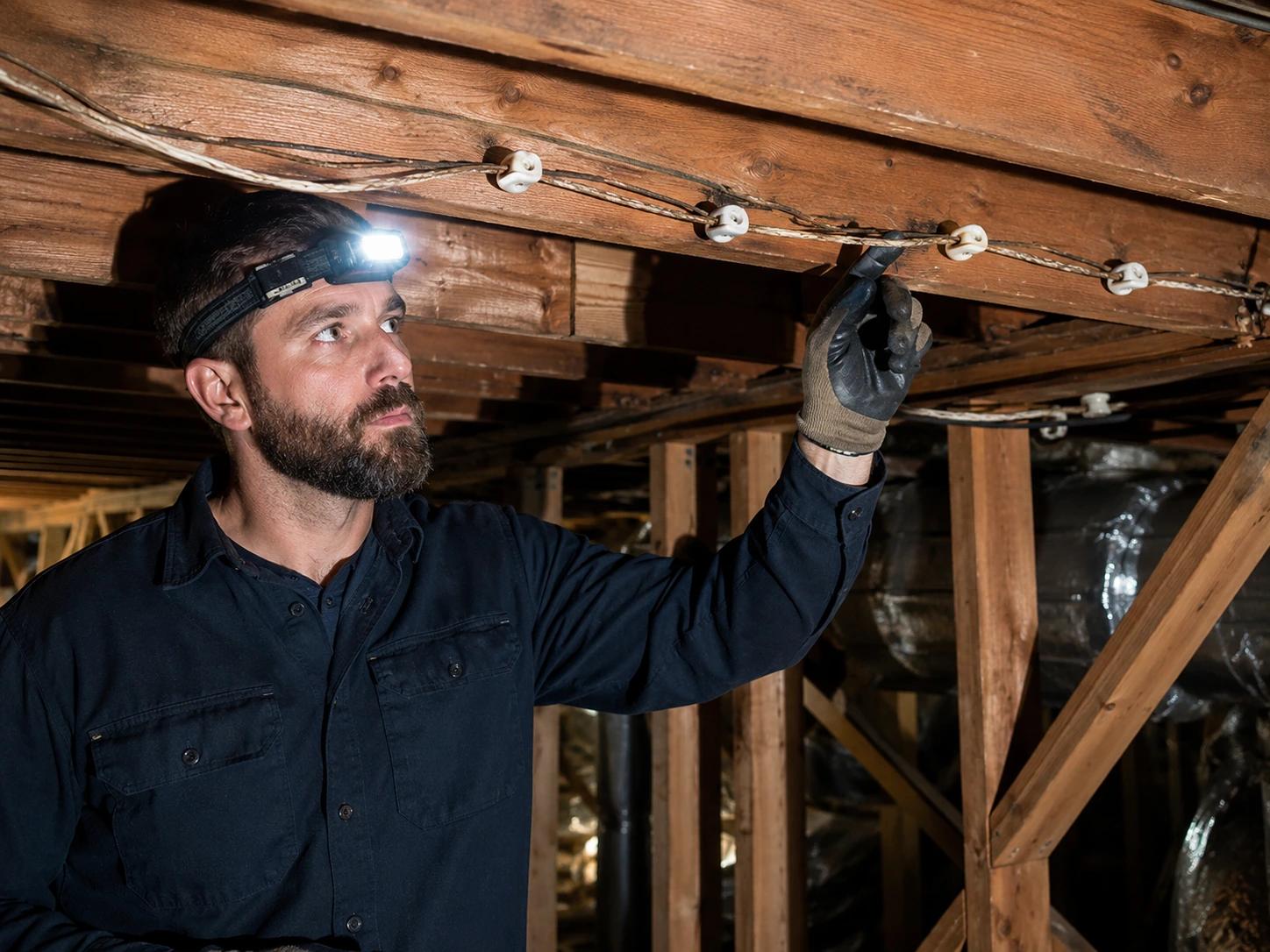
- Attic & Basement Junction Boxes: Hidden splices inside unfinished utility areas that feed branch circuits.
- Main Distribution Panel Board: Inspecting where aluminum neutral and hot conductors land on breaker terminals and neutral bus bars, ensuring compatibility and proper torque.
The Science of Calibrated Torque
Under the Ontario Electrical Safety Code, AlumiConn set screws cannot be tightened "by feel" with a standard handheld screwdriver. Overtightening shears the soft aluminum strand, while undertightening leaves gaps for oxidation.
Our licensed electricians utilize calibrated, factory-certified torque screwdrivers set precisely to manufacturer-specified inch-pounds (typically 10 to 15 in-lbs depending on wire gauge), ensuring a flawless, permanent connection that lasts for decades.
6. What Factors Determine Your Project Scope? (Why Custom Quotes Are Mandatory)
Homebuyers frequently ask for a fixed dollar quote over the phone for aluminum wiring remediation. However, every home possesses a unique architectural layout, total device count, and electrical history, making standardized flat-rate online pricing misleading and inaccurate.
Reputable Licensed Electrical Contractors do not provide blind pricing without evaluating the physical parameters of your property.
Key Site Variables That Determine Your Project Scope:
| Site Parameter | Engineering & Material Impact on Remediation Scope |
|---|---|
| Total Device & Junction Count | A compact 1,200 sq ft bungalow in North York may contain 65 total electrical points, whereas an expanded 3,000 sq ft two-story home in Etobicoke may contain over 150 outlets, switches, dimmers, and light fixtures. |
| Junction Box Depth & Volume | Mid-century homes often feature shallow 1.5-inch metal utility boxes. Fitting modern GFCIs, bulky smart dimmers, and AlumiConn lugs into shallow boxes may require installing box extenders to meet OESC box-fill volume requirements. |
| Presence of Past Amateur Modifications | Over 50 years, prior homeowners may have installed ungrounded outlets, reversed polarity, or spliced copper fixtures improperly. Bringing pre-existing wiring up to current safety standards is part of passing the ESA inspection. |
| Multi-Wire Branch Circuits (MWBC) | 1960s homes frequently share neutral conductors across multiple branch circuits. Splicing MWBCs requires specialized phase identification and tie-handle breakers to prevent neutral conductor overloading. |
| Ceiling Fixture Accessibility | Accessing high-vaulted ceiling chandeliers or heavy attic junction boxes requires specialized staging, ladders, and safety equipment. |
Avoid Unlicensed Operators Offering Cash "Fixes": In Ontario, performing electrical work without an ECRA/ESA contractor license is illegal under the Electricity Act. Unlicensed handymen cannot pull permits, cannot schedule ESA inspections, and cannot provide the official Certificate of Acceptance that your home insurer demands.
Contact our licensed master electricians today to arrange a comprehensive on-site aluminum wiring assessment and written remediation proposal.
7. Serving North York, Toronto and the Entire Greater Toronto Area (GTA)
Our licensed electrical technicians specialize in turnkey aluminum wiring remediation, electrical safety audits, and insurance compliance across all primary GTA service areas:
- North York & Willowdale: Comprehensive AlumiConn pigtailing, 100A-to-200A panel upgrades, and insurance sign-offs throughout Don Mills, Newtonbrook, and Bayview Village.
- Etobicoke & The Kingsway: Remediating 1960s side-splits, shallow box expansions, and insurance inspections across Markland Wood, Alderwood, and Richview.
- Scarborough & Agincourt: Complete home pigtailing, knob-and-tube remediation, and basement rental suite compliance.
- Mississauga & Port Credit: AlumiConn connector installations, aluminum branch circuit safety audits, and fast insurance turnaround.
- Toronto & Central Core: Century home wiring evaluations, aluminum subpanel remediation, and real estate pre-purchase audits.
- Markham & Richmond Hill: Complete residential electrical modernizations, ESA permit handling, and insurance certification.
Protect Your Investment with Complete Confidence
Buying a home with aluminum wiring does not have to be an overwhelming ordeal. With professional AlumiConn remediation from the master electricians at Electrovoltage, you eliminate electrical fire hazards, protect your family, satisfy all mortgage and home insurance underwriting mandates, and preserve your property value for years to come.
From our initial on-site circuit audit through filing your ESA notification of work and delivering your official Certificate of Acceptance, we deliver a flawless, stress-free experience.
Protect Your Home with Certified AlumiConn Remediation
We handle the full scope: home circuit audit, ESA Notification of Work, precision-torqued AlumiConn connectors, and your official ESA Certificate of Acceptance for your insurance provider.