November 22, 2026
Call (416) 828-6976Home EV Charger Installation in Ontario: Requirements, Panel Capacity & ESA Permits
Related Service
EV Charger Installation
Professional EV charger installation for homes and businesses.
On this page
- 1. Charging Speed & Engineering: Level 1 vs. Level 2 Compared
- 2. Does Your Electrical Panel Have Enough Capacity? (The 100A vs. 200A Dilemma)
- 3. How to Install an EV Charger on a 100-Amp Panel Without a Service Upgrade
- 4. Hardwired vs. Plug-In (NEMA 14-50): Which Is Best in Ontario?
- 5. The Legal Reality: ESA Permits & Ontario Law
- 6. What Factors Determine Your Project Scope? (Why Custom Quotes Are Mandatory)
- 7. Supporting All Major EV Brands & Charging Stations Across Ontario
- 8. Serving Toronto and the Entire Greater Toronto Area (GTA)
- Power Your Electric Vehicle with Complete Confidence
The transition toward electric mobility across Toronto and the Greater Toronto Area (GTA) is accelerating at a historic pace. Whether you have recently taken delivery of a Tesla Model Y, Ford Mustang Mach-E, Hyundai Ioniq, Porsche Taycan, or Chevrolet Silverado EV, you quickly realize that the real ownership experience centers around one critical convenience: fast, dependable charging at home while you sleep.
However, new EV owners soon encounter the painful reality of "trickle charging."
Plugging your vehicle into a standard 120-volt household wall outlet (Level 1) delivers a meager 3 to 5 miles of driving range per hour. Recharging a standard 75 kWh to 100 kWh battery pack from near empty on Level 1 can take anywhere from 35 to over 50 continuous hours.
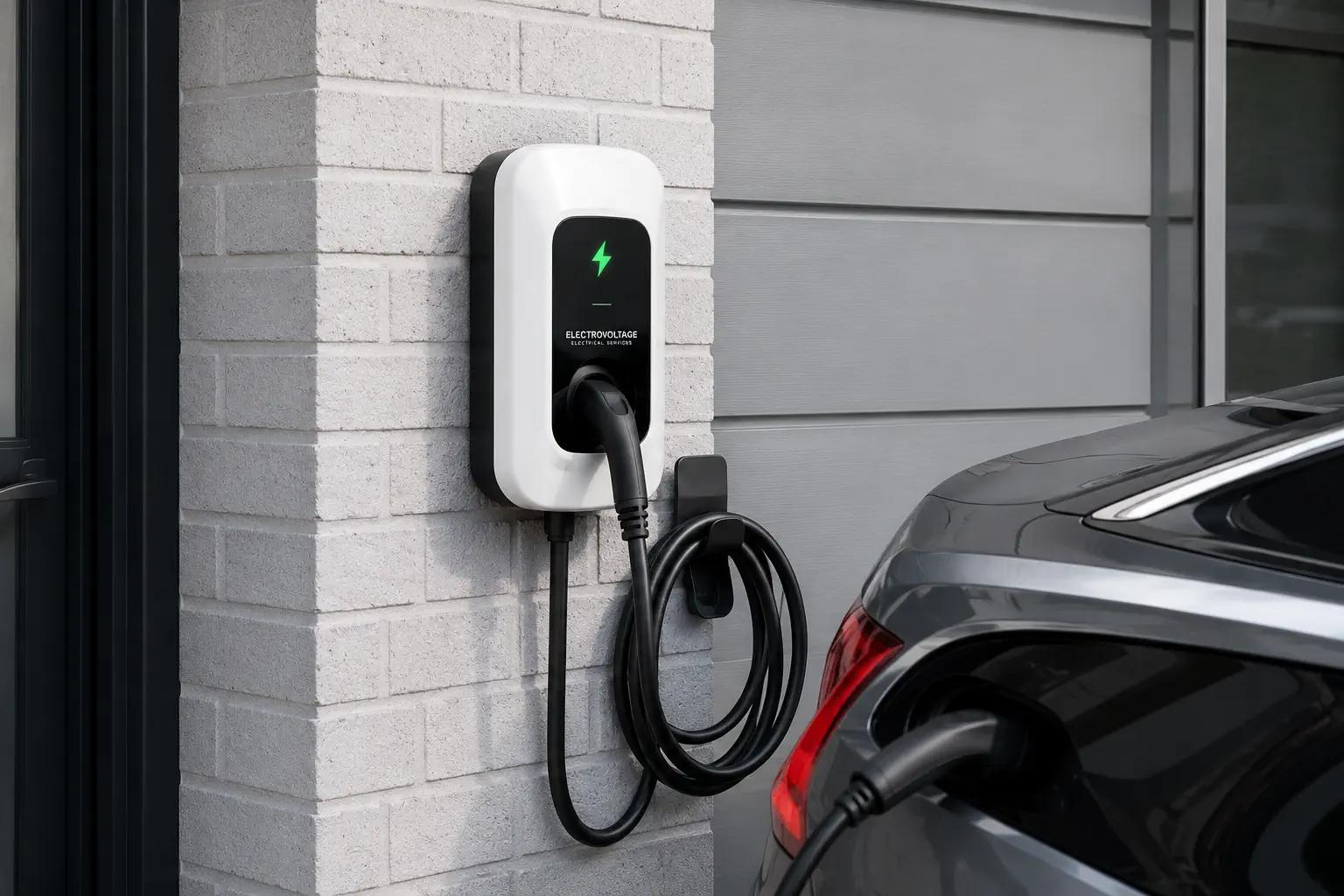
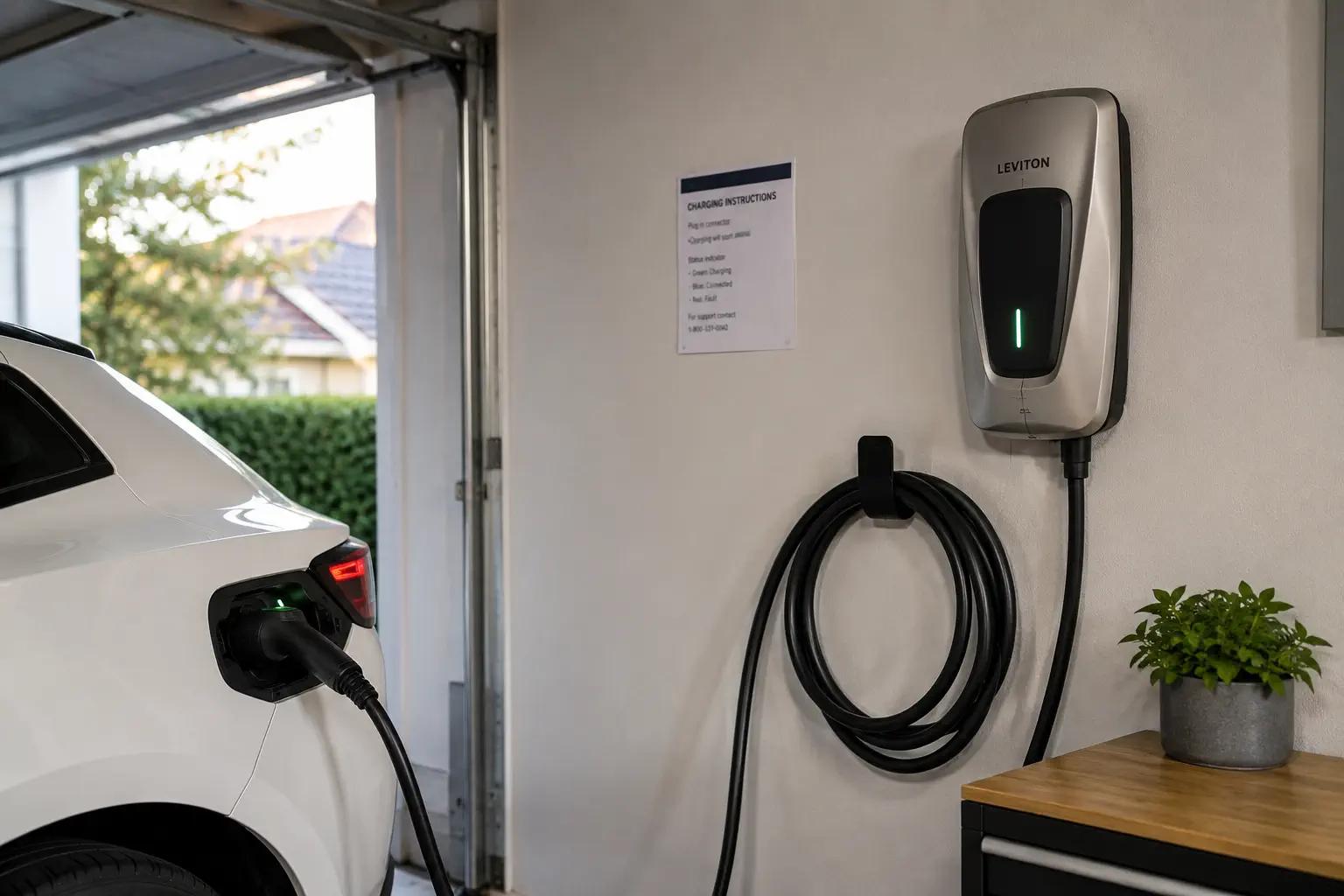
To unlock the true convenience, performance, and efficiency of your electric vehicle, installing a dedicated 240-volt Level 2 home charging station is an absolute necessity. A professionally installed Level 2 charger replenishes 25 to 45+ miles of range per hour—fully restoring your battery overnight while taking advantage of Ontario's off-peak ultra-low overnight electricity rates.
Yet, an EV charger is unlike any other household appliance. Drawing 32 to 48 continuous amperes for four to eight consecutive hours, it represents the single largest, longest-running electrical load in your entire home.
This comprehensive guide covers everything Ontario homeowners and property managers must understand before installing an EV charger: Level 1 vs. Level 2 engineering, electrical panel load calculations under the Ontario Electrical Safety Code (OESC), hardwired vs. NEMA 14-50 plug-in setups, smart load management (DCC-9), ESA permit mandates, and how to get an accurate on-site assessment from a Licensed Electrical Contractor (LEC).
1. Charging Speed & Engineering: Level 1 vs. Level 2 Compared
To understand what electrical infrastructure your home requires, you must first understand the fundamental engineering differences between charging levels:
| Charging Level | Operating Voltage & Current | Usable Power Output (kW) | Range Added Per Hour | Full Battery Recharge Time | Electrical Requirements |
|---|---|---|---|---|---|
| Level 1 (Trickle) | 120V AC / 12A continuous | ~1.44 kW | 3 – 5 miles | 35 – 55+ Hours | Standard 15A / 120V household wall outlet. |
| Level 2 (Standard) | 240V AC / 32A continuous | ~7.68 kW | 22 – 30 miles | 7 – 9 Hours | Dedicated 40A / 240V circuit; 8 AWG copper conductors. |
| Level 2 (High-Output) | 240V AC / 40A continuous | ~9.60 kW | 30 – 38 miles | 6 – 7 Hours | Dedicated 50A / 240V circuit; 6 AWG copper conductors. |
| Level 2 (Maximum) | 240V AC / 48A continuous | ~11.52 kW | 38 – 46+ miles | 4 – 5 Hours | Dedicated 60A / 240V circuit; 6 AWG (THHN in conduit) or 4 AWG copper. |
The OESC 80% Continuous Load Rule (Rule 8-104 & Rule 86-300)
Why does a 48-amp EV charger require a 60-amp circuit breaker?
Under the Ontario Electrical Safety Code (OESC), any load that draws current for three hours or more without interruption is classified as a continuous load. When electric current flows continuously through copper conductors and circuit breakers, sustained thermal energy accumulates.
To prevent insulation breakdown, circuit breaker fatigue, and fire hazards, OESC Rule 8-104 mandates that electrical equipment on continuous duty must not exceed 80% of the circuit breaker's rated capacity:
- A 32-amp continuous charger requires a 40-amp breaker (32A ÷ 0.80 = 40A).
- A 40-amp continuous charger requires a 50-amp breaker (40A ÷ 0.80 = 50A).
- A 48-amp continuous charger requires a 60-amp breaker (48A ÷ 0.80 = 60A).
Cutting corners on breaker sizing or conductor gauge is one of the most dangerous mistakes an unlicensed handyman can make, creating immediate fire hazards inside your walls.
2. Does Your Electrical Panel Have Enough Capacity? (The 100A vs. 200A Dilemma)
Before mounting an EV charger on your garage or exterior wall, your electrician must answer a critical question: Can your existing electrical panel safely support this extra load?
In older Toronto, Etobicoke, and East York neighborhoods, thousands of homes operate on 100-amp main electrical services. When these houses were constructed, household appliances were modest. Today, when you add up the simultaneous electrical demand of modern living:
- Central Air Conditioner or Heat Pump: 30A to 50A
- Electric Clothes Dryer: 30A
- Electric Cooking Range / Oven: 40A to 50A
- Electric Water Heater: 20A to 30A
- Dishwasher, microwave, sump pump, and lighting circuits: 15A to 20A each
When you add a high-power EV charger demanding 40A to 60A on top of these existing loads, a standard 100-amp service is mathematically pushed beyond safe operating thresholds.
Section 8 Residential Load Calculations
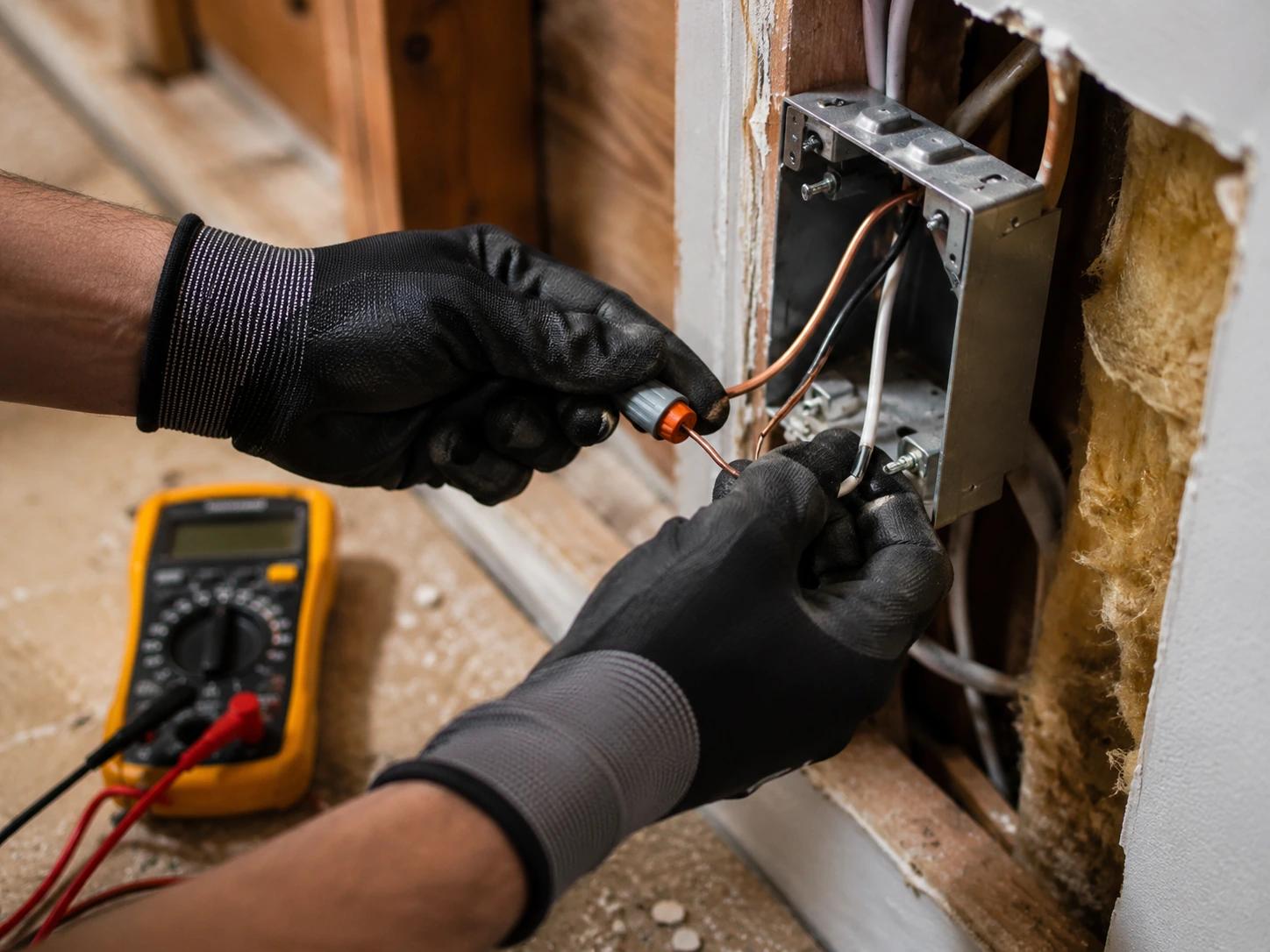
Licensed Electrical Contractors do not guess whether your panel has room. Under Section 8 of the OESC, we perform a rigorous residential load calculation based on your home's square footage, heating/cooling systems, major appliance wattage, and subpanel configurations.
If your load calculation shows that your panel is operating near maximum capacity, you have two primary code-compliant solutions:
- Complete 200-Amp Service Upgrade: Upgrading your main electrical mast, exterior meter base, and distribution panel from 100A to 200A. This provides maximum electrical headroom for your EV, future heat pumps, basement rental suites, and home additions. Learn more in our definitive guide to 100A to 200A panel upgrades in Ontario.
- Smart EV Energy Management Systems (EVEMS): Installing an intelligent load-monitoring system that allows a 100-amp panel to safely operate an EV charger without requiring a complete service upgrade.
3. How to Install an EV Charger on a 100-Amp Panel Without a Service Upgrade
For many homeowners across the GTA—particularly those living in older brick homes with overhead power lines or buried lateral utility feeds where a 200-amp service upgrade involves substantial utility lead times—an EV Energy Management System (EVEMS) is a revolutionary engineering solution.
Recognized under OESC Rule 8-106(10), an EVEMS continuously monitors the real-time electrical current entering your home.
| Smart Solution | Operating Mechanism | Ideal Property Scenario | Code Compliance & Permitting |
|---|---|---|---|
| DCC-9 Demand Controller | Dedicated physical controller installed between the main panel and EV charger; automatically cuts power if total home load exceeds 80%. | 100A homes with central A/C, electric ovens, or multiple high-draw appliances. | Fully CSA-certified; meets OESC Rule 8-106(10) requirements for avoiding service upgrades. |
| DCC-12 Panel Splitter | Compact smart energy controller designed for direct subpanel or feed-through installations. | Multi-unit dwellings, townhomes, or finished basements with tight utility spaces. | Approved by ESA inspectors across Ontario for continuous residential load shedding. |
| Dynamic Smart Chargers (Tesla / Wallbox) | Charger pairs with a dedicated electrical power meter (CT clamps) on the main service bus to dynamically throttle charging speed. | Modern breaker panels that have physical slot space but limited calculated amperage margins. | Requires compatible hardware and specific firmware configuration during ESA inspection. |
How the DCC-9 Works in Practice
Think of the DCC-9 as an automated electrical traffic officer.
When you plug in your EV at 7:00 PM, charging begins at full speed. At 7:30 PM, if your air conditioner cycles on while your electric oven is preheating and the dryer is running, the DCC senses that total household power is nearing 80% of your 100-amp capacity.
The DCC instantly and safely de-energizes the EV charger. As soon as dinner is finished and the oven turns off, household consumption drops. The DCC automatically re-energizes the charging circuit, and your vehicle resumes charging at full speed through the night.
By utilizing an approved EVEMS, you save substantial utility coordination time and avoid immediate service upgrade requirements while maintaining complete safety.
4. Hardwired vs. Plug-In (NEMA 14-50): Which Is Best in Ontario?
When purchasing a Level 2 charging station (such as a Tesla Wall Connector, ChargePoint Home Flex, or Grizzl-E), you must choose between two installation architectures: hardwiring directly into the electrical system or installing a 240V NEMA 14-50 wall receptacle.
While plug-in chargers offer portability, hardwiring is strongly recommended for permanent residential installations across Ontario:
| Installation Feature | Hardwired EV Charging Station | NEMA 14-50 Plug-In Receptacle |
|---|---|---|
| Maximum Charging Amperage | Up to 48A continuous (on 60A breaker) or higher | Capped at 32A – 40A continuous (on 40A or 50A breaker) |
| OESC GFCI Breaker Mandate | Standard 2-pole breaker (charger utilizes internal Class A GFCI protection) | Mandatory 50A GFCI Breaker at the panel under OESC Rule 86-400 |
| Nuisance Tripping Risk | Zero. No dual-GFCI monitoring conflicts. | High. Panel GFCI breaker conflicts with internal EV charger GFCI monitoring. |
| Weather & Cold Resistance | Fully sealed conduit; rated for severe Canadian sub-zero winters (-40°C). | Plug connection can loosen or accumulate condensation in unheated garages. |
| Receptacle Terminal Wear | No moving prongs; continuous solid copper mechanical connection. | Frequent plugging/unplugging loosens internal brass contacts, causing localized heat buildup. |
| Hardware Longevity | Lifetime permanent fixture; lowest fire risk profile. | Cheap residential-grade outlets frequently melt under continuous 32A+ load. |
The "Nuisance Tripping" Problem with NEMA 14-50 Receptacles
Under OESC Rule 86-400, any 240-volt receptacle installed outdoors or in an unheated residential garage for EV supply equipment must be protected by a Class A Ground Fault Circuit Interrupter (GFCI) breaker inside the electrical panel.
However, virtually every modern Level 2 EV charger is also equipped with its own sensitive internal GFCI self-diagnostic circuitry.
When two GFCI monitoring systems are installed on the same electrical circuit in series, they frequently conflict with one another. Homeowners often wake up to discover that their panel's GFCI breaker tripped at 2:00 AM for no reason, leaving their car uncharged for the morning commute.
Hardwiring avoids this entirely: because the charger is permanently tied to the electrical panel, an expensive panel GFCI breaker is not required, eliminating nuisance trips while delivering 20% to 50% faster charging speeds.
The Danger of Cheap Builder-Grade 14-50 Outlets
If you choose a plug-in setup, you must ensure your contractor installs a commercial-grade, heavy-duty receptacle (such as Hubbell or Bryant).
Standard, low-cost builder-grade range outlets found in big-box hardware stores were engineered for electric kitchen stoves—which draw high current for only 15 to 30 minutes at a time. Subjecting a cheap residential receptacle to 32 to 40 continuous amperes for 8 hours night after night leads to contact degradation, prong melting, and serious electrical fires.
5. The Legal Reality: ESA Permits & Ontario Law
In Ontario, installing a Level 2 electric vehicle charging station is not a casual weekend handyman project. It is a strictly governed electrical modification under the Electricity Act and Ontario Regulation 570/05.
Who Can Legally Install an EV Charger in Ontario?
By provincial law, electrical work on your home must be executed by an ECRA/ESA Licensed Electrical Contractor (LEC).
Hiring an uncertified handyman or an unlicensed electrician working for cash exposes homeowners to extreme personal and financial liabilities:
- Invalidated Home Insurance: In the event of an electrical fire caused by an unpermitted or unlicensed EV installation, your insurance carrier is legally entitled to deny your property damage claim.
- Lack of ESA Notification: Only a Licensed Electrical Contractor can seamlessly file the required Notification of Work and secure an official Certificate of Acceptance from the Electrical Safety Authority.
- Equipment Damage: Incorrect voltage phase balancing or improper ground fault calibration can fry your vehicle's sensitive onboard charging modules—repairs that are not covered under manufacturer warranties.
The 4-Stage Professional Installation Process:
| Installation Stage | Operational Milestone | Key Technical & Regulatory Actions |
|---|---|---|
| Stage 1: Load Assessment | Section 8 Calculation | Formal load audit to evaluate main service amperage and breaker space. |
| Stage 2: Permit Filing | ESA Notification | Official permit logged with the Electrical Safety Authority prior to work. |
| Stage 3: Physical Installation | Hardware & Circuit Routing | Dedicated copper conductors, conduit, disconnects, and calibrated torque specifications. |
| Stage 4: ESA Inspection | Certificate of Acceptance | Provincial inspector conducts field review and issues legal sign-off for insurance. |
When you work with Electrovoltage (ECRA/ESA #7017240), we manage the entire regulatory process from permit application through final inspection sign-off, providing you with verifiable documentation that protects your family and satisfies your insurance company.
6. What Factors Determine Your Project Scope? (Why Custom Quotes Are Mandatory)
Property owners frequently search online for a quick, fixed dollar estimate for EV charger installation. However, every home possesses a unique architectural layout, panel distance, and electrical configuration, making standardized flat-rate online pricing misleading and inaccurate.
Reputable Licensed Electrical Contractors do not provide blind pricing without evaluating the specific structural parameters of your property.
Key Site Variables That Determine Your Installation Requirements:
| Project Factor | Engineering & Material Impact on Project Scope |
|---|---|
| Distance from Panel to Charger | A charger mounted directly adjacent to your basement panel requires only a few feet of conduit. Routing heavy 6 AWG copper across 70 feet of finished basement ceiling demands substantial labor and materials. |
| Finished vs. Unfinished Basements | Running electrical conductors through an open, unfinished utility room is straightforward. Navigating finished drywall ceilings, bulkheads, and fire barriers requires specialized wire fishing techniques. |
| Conduit & Exterior Weatherproofing | Exterior wall or driveway post installations require rigid EMT conduit, weatherproof junction boxes, weather-tight silicone flashing, and Canadian cold-rated cabling. |
| Available Electrical Panel Space | If your breaker board is completely full of circuits, your electrician may need to install a dedicated subpanel or consolidate existing 120V circuits to make room for a 2-pole 240V breaker. |
| Detached Garage & Trenching | If your vehicle is parked in a detached garage or outdoor parking pad, underground trenching below the frost line (24–36 inches) or armored direct-burial cable (TecK90) may be required. |
| Subpanel or Load Management Addition | If your home's total calculated load requires a DCC-9 energy controller or a panel upgrade to 200 amps, the overall equipment configuration adjusts accordingly. |
Beware of Low-Ball Quotes: Unlicensed operators often quote a generic rock-bottom price over the phone, only to hit homeowners with surprise fees for ESA permits, undersized aluminum wiring, or missing ground connections once your electrical panel is already taken apart. Always partner with a certified contractor who provides a comprehensive, transparent written proposal that includes all permits, materials, and ESA inspection sign-offs.
Contact our licensed master electricians today to arrange a thorough, no-obligation on-site assessment for your home.
7. Supporting All Major EV Brands & Charging Stations Across Ontario
Our certified master electricians install, configure, and maintain all primary residential charging stations and vehicle architectures:
Dedicated Charging Hardware We Install:
- Tesla Wall Connector (Gen 3 & Universal): Seamless charging for Model 3, Model Y, Model S, Model X, and Cybertruck, plus universal J1772 compatibility.
- Grizzl-E Classic & Smart: Rugged, Canadian-built heavy-duty aluminum EV chargers engineered specifically to withstand brutal Ontario winters.
- ChargePoint Home Flex: High-output smart charger with app-based scheduling, energy tracking, and dynamic amperage adjustments (16A to 50A).
- Flo Home X5 & G5: Canadian-designed charging stations featuring industrial-grade cast aluminum enclosures and cold-weather flexible cables.
- Wallbox Pulsar Plus: Ultra-compact Level 2 smart charger with built-in Bluetooth and Wi-Fi connectivity and power-sharing capabilities.
- Ford Connected Charge Station & GM Energy PowerShift: High-amperage dedicated stations designed for electric pickup trucks and commercial fleets.
8. Serving Toronto and the Entire Greater Toronto Area (GTA)
Our licensed electrical technicians deliver code-compliant, turnkey EV charging station installations across all primary GTA municipalities:
- Toronto & Central Core: Century home installations, tight basement routing, downtown lane-parking solutions, and direct Toronto Hydro coordination.
- Markham & Richmond Hill: High-amperage Level 2 installations, multi-EV family power-sharing systems, and detached garage subpanels.
- Vaughan & Woodbridge: Complete smart charger installations for executive residential properties, commercial fleet charging, and DCC-9 load management.
- Mississauga & Oakville: Underground conduit trenching, garage electrical modernizations, and Alectra Utilities compliance.
- Etobicoke & Scarborough: Upgrading older 100A panels, fuse box conversions, and outdoor curbside charging pedestals.
- North York: Aluminum branch circuit remediation for EV installations, subpanel additions, and panel capacity audits.
Related reading: EV Charger Installation in Toronto Condos: What Your Condo Board Can (and Can't) Say No To · How to Choose the Right EV Charger for Your Home
Power Your Electric Vehicle with Complete Confidence
Charging your electric vehicle at home should be effortless, safe, and lightning-fast. Entrusting your Level 2 charger installation to seasoned professionals ensures your family’s safety, protects your vehicle's expensive battery pack, satisfies all home insurance policies, and guarantees a seamless first-time pass with the Electrical Safety Authority.
At Electrovoltage, we handle every detail from beginning to end. From performing your initial OESC Section 8 load calculation and recommending the ideal charging hardware to filing your ESA permit and delivering your official Certificate of Acceptance, our master electricians ensure your home is fully powered for the electric future.
Contact our team today to discuss your EV charger installation requirements and schedule your comprehensive on-site assessment:
- 📞 Direct Phone: (416) 828-6976
- 📧 Email Inquiries: info@electrovoltage.ca
- 🌐 Online Consultation: Schedule Your EV Charger Assessment Online
- 🛡️ Licensing & Credentials: Fully Licensed Electrical Contractor (ECRA/ESA #7017240) | Master Electrician on Staff | Fully Insured | WSIB Coverage