November 25, 2026
Call (416) 828-6976Why Does My Circuit Breaker Keep Tripping? (And When It's an Emergency in Ontario)
Related Service
Electrical Troubleshooting
Fast diagnosis and repair for electrical issues big or small.
On this page
- 1. The 4 Root Causes: Why Circuit Breakers Trip in Ontario Homes
- 2. Deep Dive: Understanding Overloads vs. Dead Shorts
- 3. "Why Does My Breaker Trip with Nothing Plugged In?"
- 4. The 5 Red Flags: When a Tripping Breaker Is an Electrical Emergency
- 5. The Correct 3-Step Procedure to Reset a Breaker Safely
- 6. How Master Electricians Diagnose and Repair Tripping Breakers
- 7. Serving Toronto and the Greater Toronto Area (GTA)
- Fast, Code-Compliant Electrical Troubleshooting
You walk into your kitchen, turn on the microwave while the coffee maker is brewing, and suddenly the power cuts out.
You open your electrical panel, locate the breaker with the handle sitting in the middle, flip it back on, and life goes on. That is a textbook circuit overload—annoying, but normal.
However, what happens when a circuit breaker trips repeatedly every few hours? Or worse, what if the breaker trips immediately the second you flip it, even when every single appliance, lamp, and charger on that circuit is completely unplugged?
At Electrovoltage, our master electricians respond to hundreds of electrical troubleshooting and emergency calls across Toronto and the Greater Toronto Area (GTA) every month.
While a tripping breaker is actually doing its job—sacrificing power to prevent your wiring from melting into a catastrophic house fire—frequent tripping is a critical warning sign that your electrical system has developed an underlying hazard.
This comprehensive engineering guide explains the four root causes of tripping breakers, why breakers trip with nothing plugged in, five urgent red flags that indicate an active electrical fire risk, the safe reset procedure, and how licensed electricians pinpoint hidden faults without damaging your finished walls.
1. The 4 Root Causes: Why Circuit Breakers Trip in Ontario Homes
Modern residential circuit breakers are precision safety devices engineered to interrupt electrical current before conductors overheat.
Depending on the age of your electrical panel and the type of breaker installed, your breaker is reacting to one of four distinct electrical phenomena:
| Failure Mode | Physical Cause Inside the Circuit | Characteristic Sound & Feel | Immediate Danger Level |
|---|---|---|---|
| 1. Circuit Overload | Too many appliances drawing more total amperage than the circuit rating (e.g., drawing 19A on a 15A breaker). | Delayed trip (takes 10 seconds to several minutes); panel feels warm. | Low (safety mechanism operating correctly), but repeated overloads degrade breaker mechanics. |
| 2. Short Circuit | Bare hot wire touches a neutral wire; electrical resistance drops to near zero, causing a massive current surge (1,000A+). | Instantaneous trip; often accompanied by an audible "pop" or small spark at the outlet. | High. Severe arcing hazard; can ignite wall cavities or weld breaker contacts. |
| 3. Ground Fault | Hot wire touches a bare ground wire, metal conduit, or metal electrical box (often exacerbated by moisture). | Instantaneous trip; GFCIs trip at just 4 to 6 milliamperes of leakage current. | Severe Shock Hazard. High risk of fatal electrocution in bathrooms, kitchens, and outdoor areas. |
| 4. Arc Fault (AFCI) | Damaged wire insulation, loose screw terminals, or crushed cords causing micro-arcing across air gaps. | AFCI breaker trips with flashing diagnostic LED indicator code. | Extreme Fire Hazard. Arcing produces temperatures exceeding 5,500°C, igniting nearby wood framing. |
2. Deep Dive: Understanding Overloads vs. Dead Shorts
To diagnose the problem accurately, you must distinguish between an amperage overload and an internal circuit fault.
A. The Circuit Overload (Amperage Capacity Exceeded)
Under the Ontario Electrical Safety Code (OESC Rule 8-104), continuous electrical loads must not exceed 80% of the circuit breaker's rated capacity:
- A 15-Amp Circuit (wired with 14 AWG copper) is rated for a continuous maximum of 1,440 Watts (12 Amps) at 120 Volts.
- A 20-Amp Circuit (wired with 12 AWG copper) is rated for a continuous maximum of 1,920 Watts (16 Amps) at 120 Volts.
In older homes across Toronto, North York, and Etobicoke, builders routinely wired all three or four bedrooms onto a single 15-amp general lighting circuit.
If family members run a portable ceramic space heater (1,500W), a high-end gaming PC (600W), and a television (150W) on the same circuit simultaneously, total consumption reaches 2,250 Watts (18.75 Amps).
The bimetallic strip inside the breaker slowly heats up, bends, and trips the latch after a few minutes.
The Solution: Unplug heavy-draw appliances or contact a Licensed Electrical Contractor to install a dedicated branch circuit for high-draw appliances or execute an electrical panel upgrade.
B. The Dead Short Circuit (Zero Resistance)
Unlike an overload that takes minutes to trip, a short circuit trips instantaneously.
When a hot conductor (black wire) bypasses the appliance load and touches the neutral conductor (white wire), the resistance drops to near zero. Following Ohm's Law (I = V / R), current spikes instantaneously into thousands of amperes.
The magnetic coil inside the breaker reacts in less than 16 milliseconds (less than one electrical cycle), slamming the contacts open to prevent the wires from vaporizing inside your walls.
3. "Why Does My Breaker Trip with Nothing Plugged In?"
One of the most frustrating dilemmas for homeowners is when a breaker trips repeatedly even after they have walked through the house and unplugged every television, lamp, toaster, and phone charger.
If everything is unplugged, what is drawing power?
1. Hidden Hardwired Loads
Many homeowners forget that general outlet circuits often share power with hardwired ceiling fixtures:
- Bathroom or kitchen exhaust fans with seized motor bearings drawing locked-rotor current.
- Recessed potlights with failed electronic transformers or burnt drivers.
- Hardwired smoke alarms or doorbell transformers tucked in basements.
- Crawlspace or basement sump pump receptacles.
2. Physical Cable Damage Inside the Wall
Wires run through wooden studs throughout your home. Over years, conductors can suffer physical damage:
- Renovation Punctures: A picture hanger, drywall anchor, baseboard nail, or TV wall mount screw driven directly through Romex cable inside the wall stud.
- Rodent Chewing: Mice and squirrels in attics and crawlspaces chewing through PVC wire jackets, creating bare copper short circuits.
- Water & Moisture Infiltration: Winter roof leaks, melting ice dams, or plumbing leaks trickling down wall cavities into junction boxes.
3. Damaged Receptacle or Switch Terminals
Over decades of use, wall outlets wear out internally. If a terminal screw has worked loose, or if internal brass contact wipers have fatigued and cracked, they can shift and short directly against the grounded metal electrical box.
If you notice a warm wall plate, read our detailed diagnostic guide on dead outlets and warm wall plates.
4. Breaker Mechanical Fatigue or Bus Bar Pitting
Circuit breakers are mechanical devices with internal springs, latches, and contact points. After 25 to 40 years of service, breakers suffer mechanical fatigue:
- Weakened internal springs trip at far below their rated amperage.
- Arc pitting on the breaker's connection clip where it stabs onto the panel's copper/aluminum bus bar creates high resistance.
- In homes with obsolete panels like Federal Pacific Electric (FPE) Stab-Lok or Commander fuseboxes, breaker failures are dangerously common. Review our guide on 5 warning signs your electrical panel needs an upgrade.
Breaker Won't Reset or Tripping Continuously?
Don't keep forcing a tripped breaker. Speak directly with a Licensed Master Electrician (ECRA/ESA #7017240) to diagnose hidden shorts, ground faults, or panelboard defects safely.
4. The 5 Red Flags: When a Tripping Breaker Is an Electrical Emergency
While a nuisance trip from a vacuum cleaner is harmless, certain breaker behaviors signal imminent electrical fire or catastrophic panel failure.
If you observe any of the following five symptoms, shut off the main breaker if safe to do so and call an emergency electrician immediately:
| Warning Sign | What It Indicates Inside the System | Immediate Action Required |
|---|---|---|
| 1. Burning Plastic or "Fishy" Odor | Wire insulation, plastic breaker casings, or outlet receptacles are melting under extreme localized heat. | Evacuate room, cut power to circuit, call emergency service. |
| 2. Buzzing, Sizzling, or Hissing Sounds | Continuous electrical micro-arcing between breaker stab clips and the energized bus bar. | Do not touch panel. Call licensed electrician immediately. |
| 3. Hot Panel Door or Breaker Casing | Severe internal resistance or loose bus connection transferring heat through metal panel deadfront. | Discontinue heavy appliance use immediately; schedule urgent inspection. |
| 4. Instant Violent "Bang" with Visible Flash | A catastrophic dead short circuit with high inrush current causing arc flash discharge. | Do not attempt to reset. Wiring must be physically tested with a megohmmeter. |
| 5. Scorched, Discolored, or Melted Breaker Body | Sustained thermal breakdown has structurally compromised the breaker mechanism. | Breaker and underlying bus bar must be replaced by a licensed professional. |
For a step-by-step breakdown of how dispatchers and master technicians respond to urgent calls, see our guide on what happens when you call an emergency electrician.
5. The Correct 3-Step Procedure to Reset a Breaker Safely
Many homeowners push a tripped breaker handle toward "ON" and wonder why it feels loose, spongy, and snaps right back into the center.
Circuit breakers are engineered with an internal free-trip mechanism that disconnects the contacts regardless of handle position. Follow this safe 3-step sequence:
| Step | Action | Safety Purpose |
|---|---|---|
| Step 1: Disconnect Loads | Turn off and unplug all devices on the affected branch circuit. | Prevents a sudden inrush current spike from immediately tripping the breaker again when energized. |
| Step 2: Push Firmly to OFF | Push the handle firmly all the way to the OFF position until you feel and hear a distinct "CLICK". | Overcomes and resets the internal mechanical trip spring latch. |
| Step 3: Wait 10s & Push ON | Wait 10 seconds, then flip the handle firmly to the ON position while standing slightly to the side. | Protects against arc flash in case an explosive dead short remains on the line. |
Two Critical Safety Warnings: What You Must NEVER Do
- NEVER tape, wedge, or physically hold a breaker in the ON position: Circuit breakers are designed to trip internally even if the external handle is pinned open (trip-free design). Forcing a breaker to hold an active short bypasses thermal relief and will ignite the wires inside your walls within seconds.
- NEVER replace a 15-Amp breaker with a 20-Amp breaker to stop tripping: If your circuit was wired with standard 14 AWG copper cable, it is physically incapable of safely carrying 20 amperes of current. Upsizing the breaker turns the hidden copper wire into an unshielded heating element.
6. How Master Electricians Diagnose and Repair Tripping Breakers
When our licensed master electricians arrive at your property, we do not guess or randomly replace parts. We follow systematic diagnostic engineering protocols to trace the fault:
1. Digital Multimeter & Clamp-On Ammeter Testing
We measure live operational amperage under full branch load to confirm whether the circuit is exceeding its continuous 80% OESC rating.
2. Insulation Resistance (Megohmmeter) Testing
Using a specialized high-voltage megger, we inject a test voltage (typically 500V to 1,000V DC) through disconnected conductors to detect microscopic breakdowns in wire insulation that are invisible to standard ohmmeters.
3. Thermal Infrared Thermography
We inspect your main distribution panelboard with calibrated FLIR thermal imaging cameras, instantly identifying hot spots, loose neutral lugs, and bus bar pitting before equipment failure occurs.
4. Circuit Isolation & Device Inspection
We systematically isolate junction boxes, outlets, and switches along the circuit path until the exact point of failure is pinpointed, repairing the connection to full Ontario Electrical Safety Code compliance.
7. Serving Toronto and the Greater Toronto Area (GTA)
Electrovoltage provides priority electrical troubleshooting, emergency repairs, and code compliance inspections across all GTA municipalities:
- Toronto & Downtown Core: Knob-and-tube troubleshooting, panel replacements, and high-rise condo circuit repairs.
- Vaughan & Woodbridge: Industrial and commercial emergency repairs, high-amperage troubleshooting, and 200A upgrades.
- Etobicoke & Kingsway: Tripping breaker diagnostics, mid-century split-level circuit isolation, and safety audits.
- North York & Willowdale: Aluminum wiring remediation and breaker repair in 1960s subdivisions.
- Markham & Richmond Hill: Luxury home circuit load management, AFCI nuisance trip diagnostics, and subpanel additions.
- Mississauga & Brampton: Commercial kitchen breaker diagnostics, residential service upgrades, and emergency callouts.
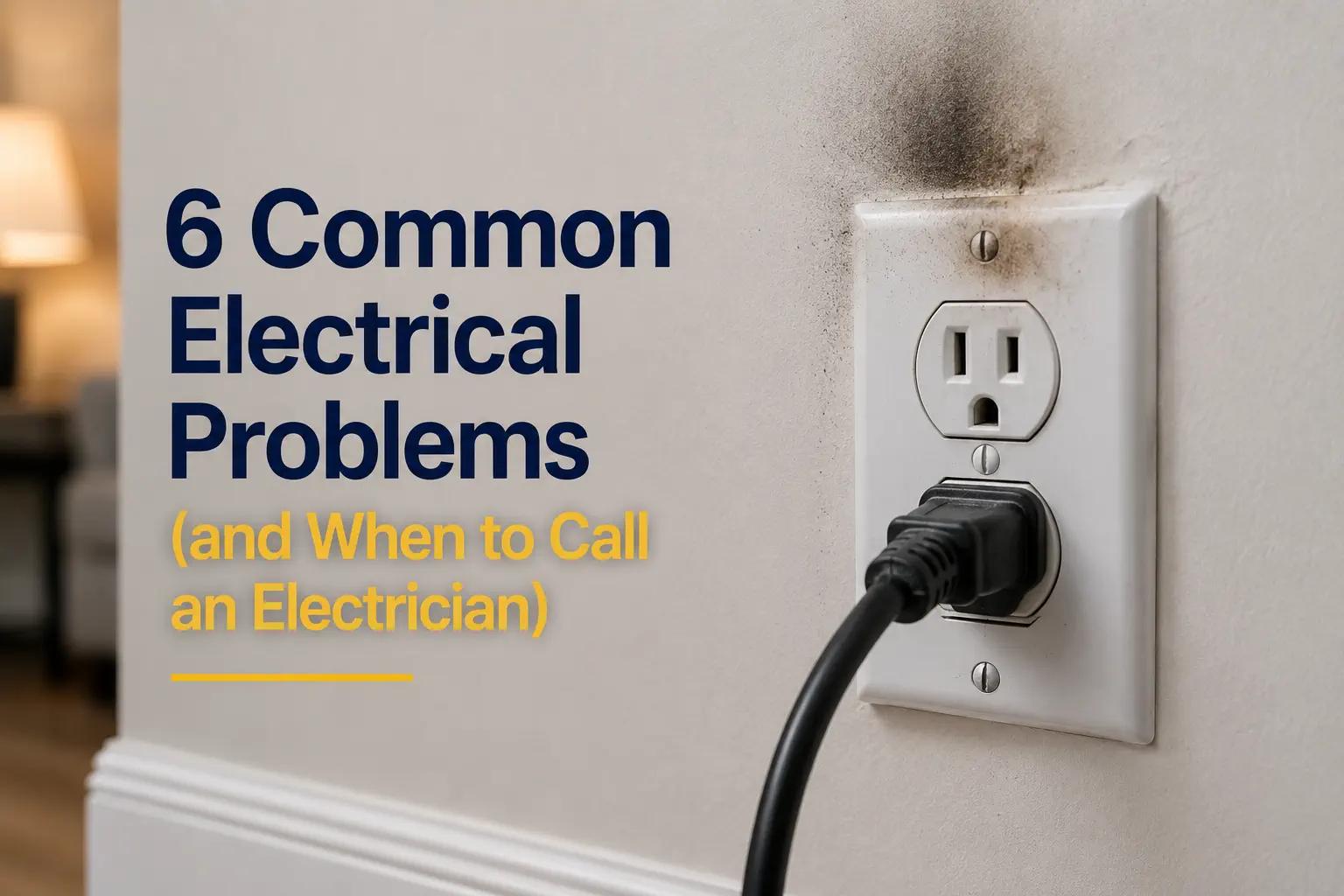
For general guidance on common household electrical warning signs, consult our guide on common electrical problems and when to call an electrician.
Fast, Code-Compliant Electrical Troubleshooting
A circuit breaker that refuses to reset or trips without explanation is a symptom of a hidden hazard that requires professional evaluation.
Whether your home has an overloaded branch circuit, a hidden short behind drywall, or an aging electrical panelboard, our licensed master electricians (ECRA/ESA #7017240) deliver safe, permanent, and warrantied solutions.
Get Your Electrical Circuit Diagnosed and Repaired Today
Don't gamble with tripping breakers or buzzing panels. Call Electrovoltage for rapid dispatch across Toronto and the GTA, or schedule an upfront diagnostic visit online.