July 12, 2026
Call (416) 828-69766 Common Electrical Problems (and When to Call an Electrician)
Related Service
Electrical Troubleshooting
Fast diagnosis and repair for electrical issues big or small.
On this page
- 1. A Breaker That Keeps Tripping
- 2. Warm or Discoloured Outlets
- 3. Buzzing or Crackling Sounds
- 4. Lights That Flicker or Dim
- 5. Frequent Extension Cord Use
- 6. A Mild Shock From a Switch or Appliance
- What to Do While You Wait
- Quick Checks Before You Call
- Is It an Emergency?
- Why Electrical Work Should Be Left to a Licensed Contractor
- Keep a Record
- When to Call Us
Not every electrical hiccup is an emergency, but some warning signs should never be ignored. Here's a quick guide to common issues and what they usually mean.
1. A Breaker That Keeps Tripping
An occasional trip from an overloaded power bar is normal. A breaker that trips repeatedly, even with a light load, usually points to a wiring fault or a breaker that's failing, worth a diagnostic visit.
2. Warm or Discoloured Outlets
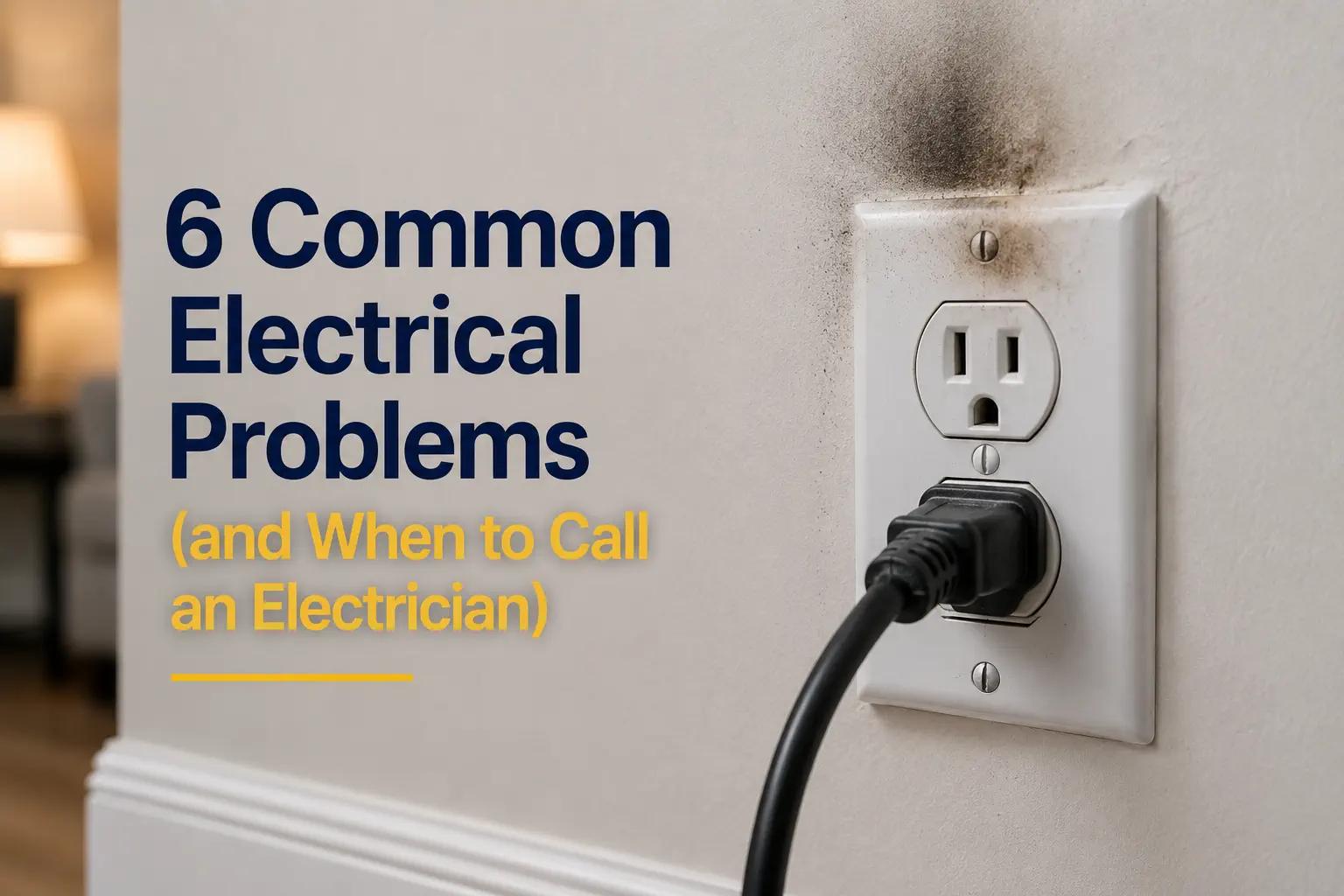
An outlet or switch plate that's warm to the touch, discoloured, or smells faintly of burning plastic is a real warning sign. Stop using it and call an electrician. This can indicate loose wiring or an overloaded circuit.
3. Buzzing or Crackling Sounds
Electrical systems should be silent. Buzzing from an outlet, switch, or panel usually means a loose connection arcing inside. This is a fire risk and should be checked promptly.
4. Lights That Flicker or Dim
Occasional flickering during a storm is one thing; lights that regularly dim when appliances kick on suggest your panel or wiring may not have enough capacity. This is often a sign it's time to consider a panel upgrade.
5. Frequent Extension Cord Use
If you're relying on extension cords or power bars daily because there aren't enough outlets where you need them, that's a sign your electrical layout hasn't kept up with how you actually use the space, and it's easily fixed by adding outlets or circuits.
6. A Mild Shock From a Switch or Appliance
Any shock, even a small static-like one, from a switch, outlet, or appliance means something is wrong with the grounding or wiring. This should be looked at right away.
What to Do While You Wait
If you notice any of the warning signs above, a few safe steps reduce risk until help arrives. Stop using the affected outlet or appliance, unplug what you can safely unplug, and switch off the individual breaker for that circuit. Keep children and pets away. Do not remove the panel cover or open an outlet yourself. If you smell burning or see smoke, leave the building and call 911 before you call an electrician. Here is what happens when you call an emergency electrician.
Quick Checks Before You Call
Some problems have a simple cause. Press the reset button on any GFCI outlet nearby, because one tripped GFCI can kill several outlets in other rooms. Check whether a single breaker has tripped or the main has gone. Test whether the problem is one device or the whole circuit by plugging in something you know works. If a quick reset solves it, note what you were running when it tripped. If it trips again, it is a real fault. A warm, dead or sparking outlet has its own set of causes, explained in what a dead or warm outlet means.
Is It an Emergency?
| What you see | What to do |
|---|---|
| Smoke, burning smell, flames | Leave, call 911 |
| Sparks or arcing from an outlet or panel | Turn off the breaker if safe, call an emergency electrician |
| Water in the panel or on live equipment | Stay clear, call an emergency electrician and the utility if needed |
| Warm or discoloured outlet | Stop using it, switch off the breaker, book urgent service |
| One dead outlet, no other signs | Book a same-day or next-day diagnosis |
Why Electrical Work Should Be Left to a Licensed Contractor
In Ontario, most electrical work requires a permit or notification to the Electrical Safety Authority (ESA) and an inspection. Hidden wiring faults are one of the leading causes of home fires, and an unlicensed repair can void insurance coverage and create liability when you sell. A licensed electrician finds the cause, not just the symptom, and leaves a record of what was done.
Keep a Record
Write down when the problem happens, what was running and what you noticed (sound, smell, light). Photos of a discoloured outlet or the panel label help. This history is often what turns a 30-minute diagnosis into a 10-minute one.
Related reading: What Actually Happens When You Call an Emergency Electrician · Dead Outlet, Warm Outlet, or Sparking Outlet: What It Actually Means
When to Call Us
Most of these issues are quick to diagnose and fix. If you're dealing with anything above, or a full power outage, we provide same-day electrical troubleshooting and 24/7 emergency service across Toronto and the GTA. Contact us or call us directly.