
November 10, 2026
Call (416) 828-6976Baseboard Heaters vs. Fan-Forced Wall Heaters: Which Is Best for Ontario Homes?
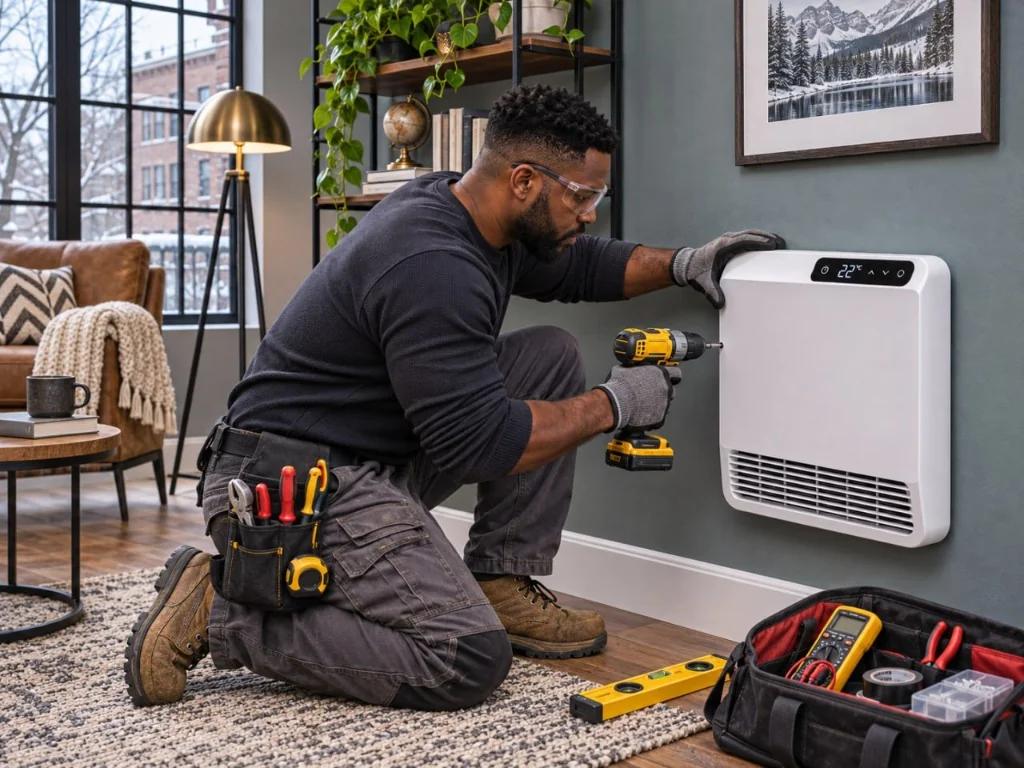
When adding supplemental electric heat to a cold room, finished basement, or home addition, homeowners in Ontario invariably compare two popular options: electric baseboard heaters and fan-forced wall heaters.
Both systems run on dedicated 120V or 240V electric circuits and deliver 100% efficient electrical resistance heat. However, they distribute that heat in fundamentally different ways, which significantly impacts room comfort, heating speed, noise levels, and furniture placement.
Here is an objective, electrician’s comparison to help you choose the right electric heating solution for your home.
The Core Difference: Convection vs. Forced Air
Understanding how each heater moves air explains why they perform differently in different spaces:
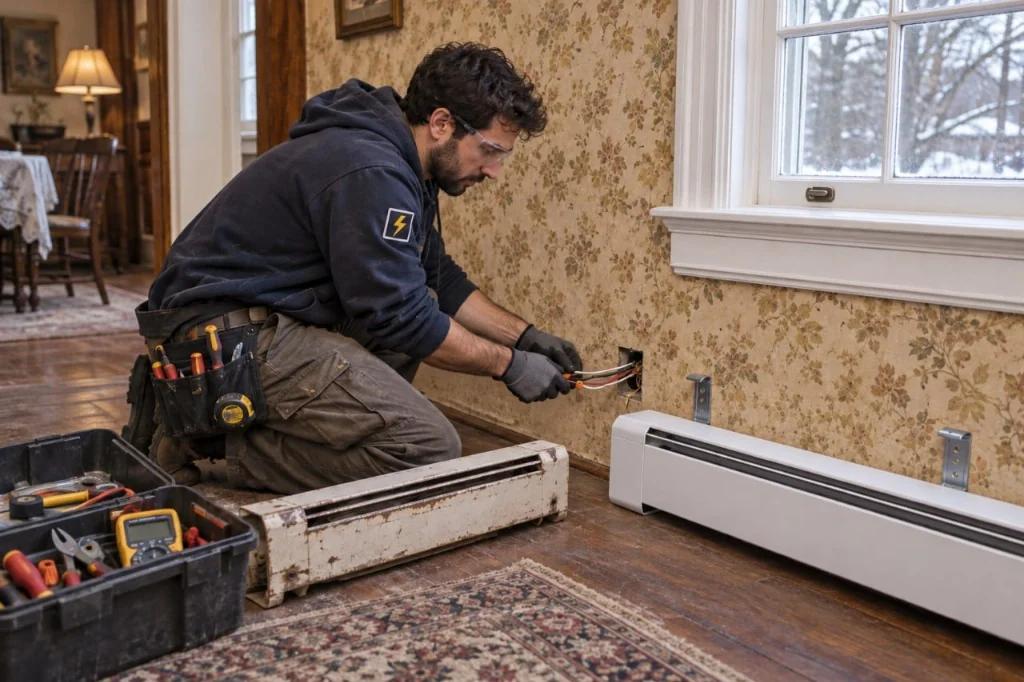
- Electric Baseboard Heaters (Natural Convection): A baseboard heater contains no moving parts. Cold air is drawn in at the bottom of the long unit, warms up across electric heating fins, and rises naturally out of the top into the room (the natural chimney effect). It provides a quiet, steady, and gradual background warmth.
- Fan-Forced Wall Heaters (Forced Convection): A wall heater houses a compact heating element paired with an electric blower fan. The motor pulls room air over the heating element and actively pushes high-velocity warm air outward and across the floor. It heats rooms much faster and can be recessed flush into the wall between standard 2"x4" studs.
1. Heating Speed and Warm-Up Time
- Fan-Forced Wall Heaters: Clear winner for rapid heating. Because the motorized fan actively forces warm air into the room, you will feel noticeable heat within 60 to 90 seconds. This makes wall heaters ideal for bathrooms, entry mudrooms, workshops, and rooms you occupy intermittently and want warmed up quickly.
- Baseboard Heaters: Because they rely on natural convection, baseboards warm a room gradually over 15 to 30 minutes. Once a room reaches temperature, however, a modern convector baseboard maintains a remarkably steady thermal comfort level without warm and cold air bursts.
2. Noise Levels and Sound Comfort
- Baseboard Heaters: Completely silent during operation. High-quality modern convectors eliminate the clicking and pinging noises common in vintage 1970s baseboards. If you are heating a bedroom, nursery, home recording studio, or quiet home office, baseboards are almost always the preferred choice.
- Fan-Forced Wall Heaters: While modern brushless blowers and squirrel-cage fans are engineered for quiet operation (producing a soft whoosh similar to a quiet bathroom ventilation fan), they still generate noticeable airflow sound. In high-traffic living areas, entryways, and bathrooms, this sound is rarely an issue, but light sleepers may find it disruptive in bedrooms.
3. Floor Space and Furniture Layout
- Baseboard Heaters: A standard residential baseboard heater requires between 3 to 8 linear feet of continuous floor space along a wall. Under the Ontario Electrical Safety Code, you must maintain at least 12 inches of clearance in front of the unit, meaning you cannot place beds, dressers, bookshelves, or full-length curtains directly over the heater. In smaller rooms, this can significantly constrain your interior layout.
- Fan-Forced Wall Heaters: Wall heaters mount vertically, typically occupying a compact footprint of just 12" x 14" to 14" x 20". They can be recessed flush inside the drywall or surface-mounted roughly 8 to 12 inches off the finished floor. This frees up valuable wall perimeter length for furniture, cabinets, and storage.
4. Energy Efficiency and Running Costs
Both heaters convert 100% of the electrical energy they consume into heat energy. A 1,500-watt baseboard and a 1,500-watt fan-forced heater consume the exact same amount of electricity per hour of active operation.
However, real-world hydro costs differ based on usage patterns and thermostats:
- Because fan-forced heaters distribute air rapidly, they can be paired with count-down electronic timers in bathrooms and laundry rooms to run only while the space is in use.
- For larger living spaces, pairing either heater type with a smart line-voltage thermostat (such as Mysa or Sinope) rather than a simple mechanical dial can reduce winter electric heating bills by up to 25%.
Comparison Summary: Which Fits Your Room?
| Feature | Electric Baseboard Heater | Fan-Forced Wall Heater | | :--- | :--- | :--- | | Operation Sound | 100% Silent | Gentle fan hum (similar to quiet bath fan) | | Heat Distribution | Natural passive convection | Active high-velocity fan blower | | Heating Speed | Slow & steady (15–30 mins) | Fast & immediate (1–2 mins) | | Space Required | 3 to 8 feet of floor perimeter | Compact 14" x 18" wall footprint | | Furniture Clearance | Must keep furniture 12" away | Elevated off floor; frees baseboard space | | Electrical Circuit | Dedicated 120V / 240V | Dedicated 120V / 240V | | Best Room Use | Bedrooms, living rooms, basements | Bathrooms, entryways, mudrooms, garages |
Room-by-Room Recommendations
- Bedrooms & Home Offices: Choose a Modern Convector Baseboard. The silent operation ensures uninterrupted sleep and quiet work environments.
- Bathrooms & Powder Rooms: Choose a Fan-Forced Wall Heater. Fast warm-up provides immediate comfort right after stepping out of the shower, and wall mounting keeps electrical components safely elevated away from floor moisture.
- Entry Foyers & Mudrooms: Choose a Fan-Forced Wall Heater. The blower quickly counteracts blasts of freezing winter air when exterior doors open and leaves floor space clear for boot trays.
- Finished Basements: Both work exceptionally well. Baseboards are excellent for long open recreation rooms, while fan-forced units or under-cabinet kickspace heaters are ideal for tight basement dens and wet bars.
- Garages & Workshops: Choose a High-Output Fan-Forced Unit Heater. Heavy-duty 240V ceiling-mounted or wall-mounted heaters (4,000W to 5,000W) are the gold standard for circulating warmth across concrete floors.
Professional Electrical Installation Across Toronto & the GTA
Whether you choose the silent comfort of baseboards or the space-saving speed of fan-forced wall heaters, both systems draw heavy continuous current and require dedicated circuits wired to the Ontario Electrical Safety Code (Section 62).
Electrovoltage supplies and installs all styles of fan-forced wall heaters and electric baseboard heaters, upgrades electrical panels when added heating loads demand extra capacity, and arranges all Electrical Safety Authority (ESA) inspection certificates.
Contact our team or call our licensed Master Electricians at (416) 828-6976 to discuss heating options for your home today.
Related Service
Fan-Forced Wall Heater Installation
Fast, space-saving electric wall heater and fan-forced heater installation with dedicated 240V wiring.
Get Started
Request a Quote Today
Tell us about your project and we'll get back to you with a quote.