
November 10, 2026
Call (416) 828-6976Electric Baseboard Heater Replacement: Sizing, Wiring & Costs in Ontario
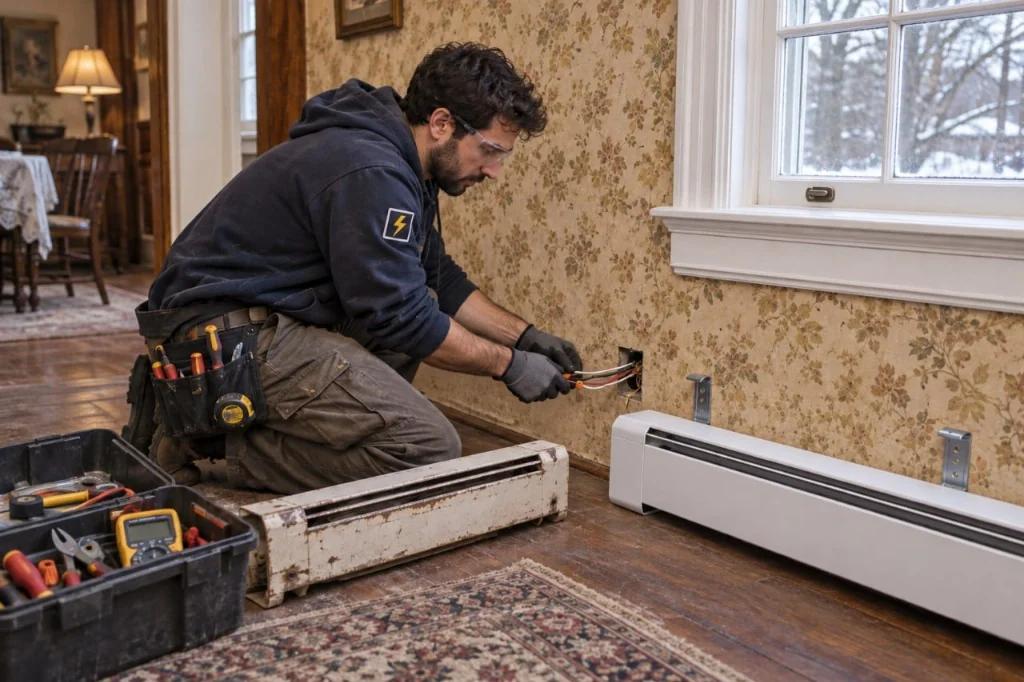
Electric baseboard heaters remain one of the most dependable ways to heat finished basements, room additions, and older homes across Ontario without running costly HVAC ductwork. However, when baseboards reach 20 to 30 years of age, homeowners typically notice loud pinging or buzzing noises, uneven heating, stuck mechanical dials, or unsightly rusted metal housings.
Replacing an aging unit with a modern convector baseboard dramatically improves comfort and efficiency, but electric space heating is governed by strict electrical safety standards. Here is what homeowners in Toronto and the GTA need to know about sizing, wiring, and code compliance before replacing electric baseboard heaters.
How to Calculate Proper Heating Wattage in Ontario
Under-sizing a heater leaves a room drafty and forces the heating element to run continuously, while over-sizing can cause rapid cycling and unnecessary strain on your electrical service.
In Southern Ontario’s climate zone, a standard guideline for residential space heating is 10 watts of heating power per square foot for rooms with standard 8-foot ceilings, average window exposure, and typical insulation:
- Small bedroom or office (100 sq. ft.): 1,000 watts (approximately 3 to 4-foot heater)
- Medium bedroom or den (150 sq. ft.): 1,500 watts (approximately 5 to 6-foot heater)
- Large master suite or living area (200 sq. ft.): 2,000 watts (approximately 6 to 8-foot heater)
- Cold basement rooms or rooms over unheated garages: Increase calculation to 12 to 14 watts per square foot to compensate for concrete heat absorption and higher thermal loss.
For rooms requiring more than 2,000 watts, installing two shorter heaters on opposite walls provides vastly superior heat distribution compared to a single oversized unit.
The Electrical Code: Continuous Load Rules & Circuit Sizing
Electric heaters are classified as a continuous electrical load under the Ontario Electrical Safety Code (OESC Section 62 and Rule 8-104), meaning they operate continuously for three hours or more during cold winter spells.
Because of this, an electric heating circuit must never be loaded beyond 80% of the circuit breaker's rated capacity:
| Breaker & Voltage | Maximum Continuous Wattage (80% Limit) | Minimum Wire Gauge | | :--- | :--- | :--- | | 15 Amp, 240V | 2,880 Watts | 14/2 NMD90 Copper (Romex) | | 20 Amp, 240V | 3,840 Watts | 12/2 NMD90 Copper (Romex) | | 30 Amp, 240V | 5,760 Watts | 10/2 NMD90 Copper (Romex) | | 15 Amp, 120V | 1,440 Watts | 14/2 NMD90 Copper (Romex) |
Important: Whenever possible, baseboard heaters should always be wired at 240 volts rather than 120 volts. A 240V connection draws half the amperage for the exact same heat output, allowing you to run smaller gauge wiring, connect multiple units to one circuit, and reduce thermal stress inside your electrical panel.
Critical Placement & Clearance Rules
Improper heater placement is one of the leading causes of residential electrical inspection failures and home fires:
- Never mount beneath wall receptacles: OESC Rule 62-104 strictly prohibits installing baseboards directly beneath convenience electrical outlets. Power cords hanging from an outlet onto a hot heating element can melt, creating an immediate short circuit and fire hazard.
- Clearance from drapery and furniture: Maintain at least 12 inches (30 cm) of clear space in front of and above the heater. Curtains, sofas, or beds pushed tight against a baseboard trap heat and trip internal thermal cut-offs.
- Floor positioning: Mounting heaters along exterior perimeter walls beneath windows is ideal because the rising warm air creates a thermal curtain that neutralizes cold drafts cascading down the glass.
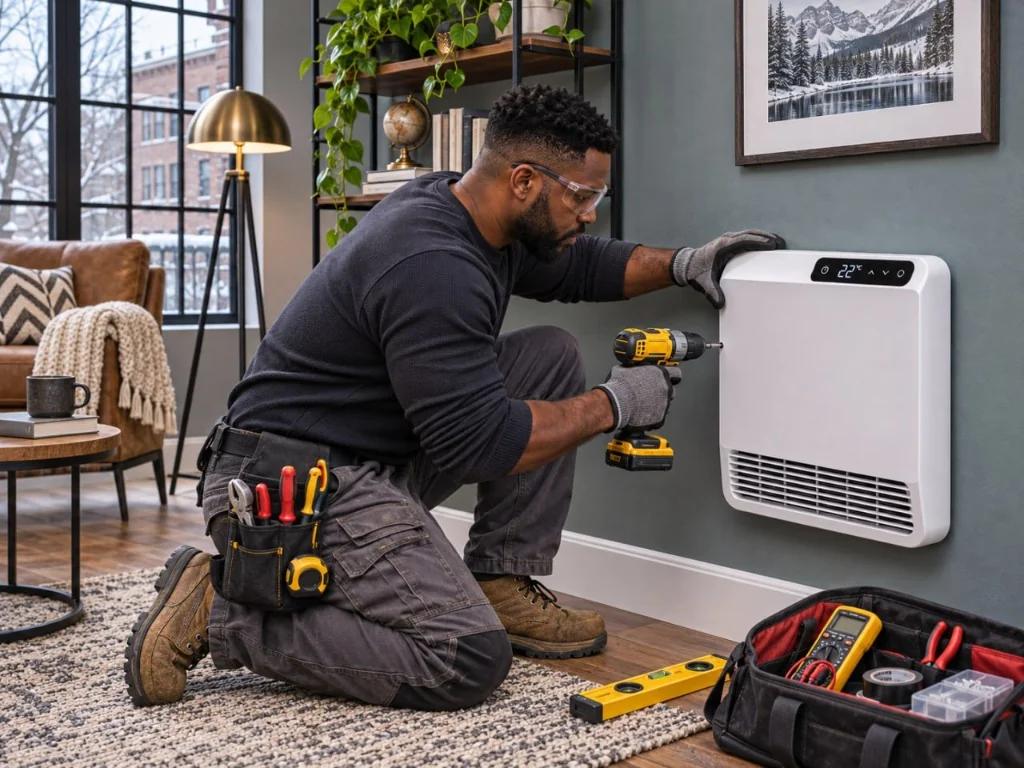
If wall space is restricted by dressers or architectural features, consider installing a compact fan-forced wall heater instead.
Upgrading to Smart Line-Voltage Thermostats
Most original baseboard installations use cheap, built-in rotary knobs on the heater body. These bi-metal dials read temperature directly at floor level next to the hot heating element, causing room temperatures to fluctuate by as much as 4°C to 5°C.
Replacing built-in dials with a wall-mounted electronic or smart thermostat provides precision temperature regulation. Because baseboard heaters run on high-voltage power (120V or 240V), standard 24V furnace thermostats (like Nest or Ecobee) will not work without complex relay transformers.
Instead, we install dedicated smart line-voltage thermostats (such as Mysa or Sinope). These devices connect directly to your 240V wiring, connect to home Wi-Fi, and allow:
- Automated scheduling and setback temperatures while asleep or away.
- Geofencing so heat turns down automatically when you leave the house.
- Energy consumption monitoring that can reduce winter heating hydro costs by 15% to 25%.
What Does Baseboard Heater Replacement Cost in the GTA?
In Toronto and the Greater Toronto Area, replacement costs generally fall into two categories:
- Direct Replacement on Existing 240V Wiring: Replacing an existing, properly sized baseboard heater where the wiring and circuit breaker are already intact typically costs between $250 and $450 per unit including labor, removal of the old heater, and installation of a modern convector unit.
- New Dedicated Circuit Installation: If you are adding a heater to a room that never had electric heat, running a new dedicated 240V home-run circuit from the main electrical panel through finished drywall or joists typically ranges between $650 and $1,200+, depending on the distance to your panel and accessibility.
- Permit & Inspection: All new circuits and major heating alterations require an ESA permit to certify that wire sizing, breaker ratings, and grounding comply with Ontario law.
Get Your Electric Heating Installed by Licensed Electricians
Whether you need to replace noisy baseboards in a finished basement, add supplemental heat to a cold bedroom addition, or wire new smart thermostats, Electrovoltage provides complete baseboard heater installation and fan-forced wall heater installation across Toronto and the entire GTA.
Request a free quote or call our Master Electricians directly at (416) 828-6976 to schedule an on-site heating assessment.
Related Service
Baseboard Heater Installation
Install or replace electric baseboard heaters with dedicated 240V circuits, precision wiring and smart thermostats.
Get Started
Request a Quote Today
Tell us about your project and we'll get back to you with a quote.