To install EV charger in Toronto, homeowners must hire a licensed electrician to secure a mandatory Electrical Safety Authority permit and verify the property's electrical panel capacity. The process involves professional mounting of a Level 2 station followed by a final safety inspection to ensure full compliance with Ontario electrical codes.
Transitioning to electric driving in Toronto often begins with excitement but quickly shifts toward frustration as homeowners confront the logistical hurdles of aging infrastructure and strict municipal codes. Installing a reliable home charging station in the GTA involves far more than simply mounting hardware; it requires a sophisticated understanding of your home's current load capacity and the rigorous safety standards enforced by the Electrical Safety Authority. This guide provides a professional roadmap to help you navigate the installation process within the unique architectural landscape of Ontario. You will learn how to evaluate your electrical service, select weather-resilient Level 2 chargers engineered for our winters, and manage the essential permit and inspection phases. From calculating 2026 installation costs to identifying local rebates, we provide the technical expertise needed to ensure your home is prepared for the next generation of transportation.
The Evolution of Home Charging in Toronto
Driving along the 401 or navigating the streets of Markham, the shift toward electric mobility is undeniable. Electric vehicles have become a standard sight across the Greater Toronto Area, reflecting a broader commitment to sustainable transit. For most owners, the transition to an EV highlights a significant shift in routine: moving away from gas stations and toward the convenience of home power.
Charging at home remains the most efficient and cost effective method for powering a vehicle. Unlike public charging infrastructure, which often involves premium pricing and wait times, home systems allow you to leverage lower overnight utility rates. This shift requires a professional approach to residential electrical services to ensure your infrastructure can handle the new load.
While the logistics of a new setup might appear daunting, the process is streamlined when following Electrical Safety Authority (ESA) guidelines. Using professional EV charger installation services ensures that when you install EV charger in Toronto properties, the work meets strict provincial safety codes. This adherence to legal standards protects your equipment, ensures long term reliability, and maintains the validity of your home insurance policy.
Step 1: Assessing Your Toronto Home Electrical Capacity
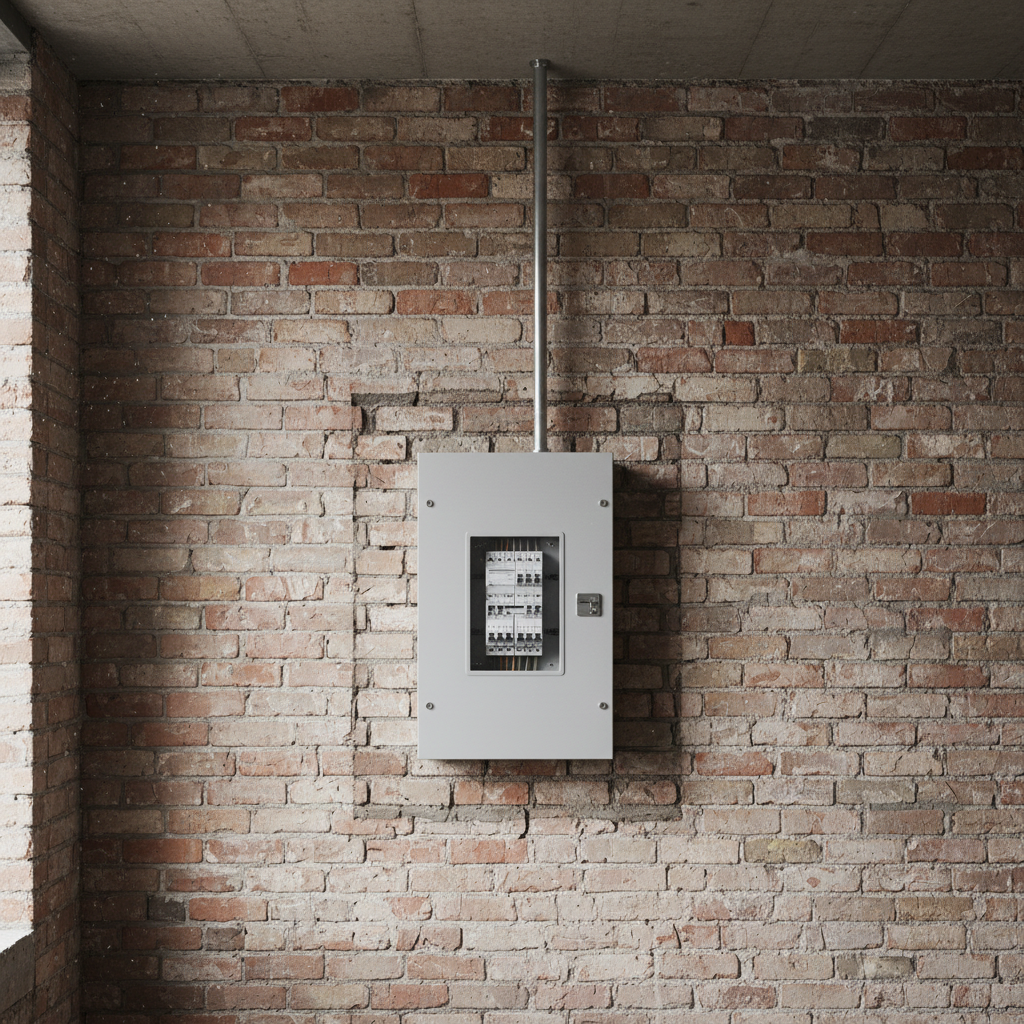
Before you choose a charging unit, you must determine if your home can physically support the added demand. In historic Toronto neighborhoods like The Annex and Riverdale, or older sections of Markham, many residences still operate on a 100-amp (100A) service. While 100A was sufficient for the mid-20th century, modern lifestyles involving air conditioning, electric ranges, and high-performance dryers often push these systems to their limit.
Adding a Level 2 EV charger introduces a significant continuous load to your panel. Under the Canadian Electrical Code and ESA standards, a continuous load is defined as any electrical draw that persists for more than three hours. These loads are subject to the 80% rule; this rule dictates that the charger can only utilize 80% of the circuit's rated capacity to prevent overheating. For example, if you intend to use a 40A charger to maximize speed, your system requires a dedicated 50A breaker and appropriate wire gauge.
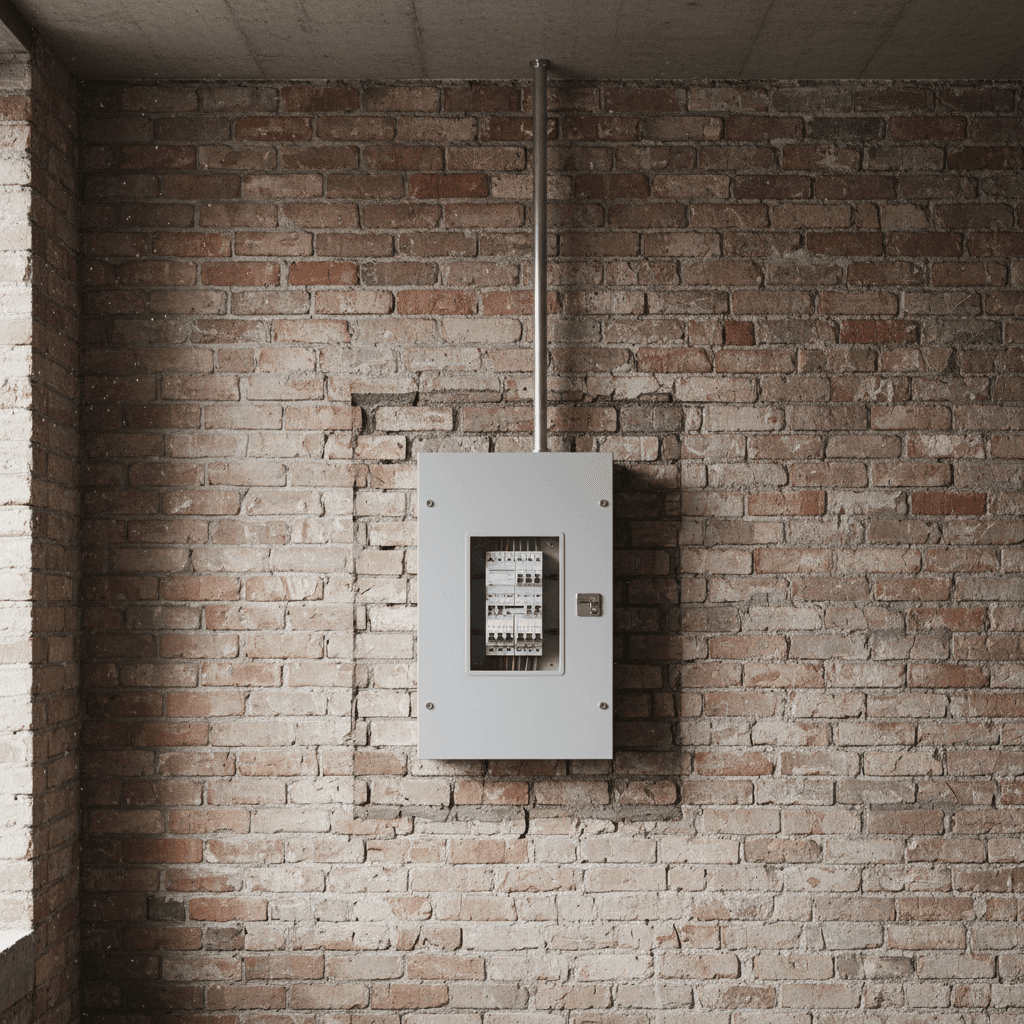
For a home with a standard 100A service, adding a 50A breaker often exceeds the safe total calculated load. This imbalance typically results in frequent breaker trips when multiple appliances run simultaneously. In these scenarios, a panel upgrade in Toronto to 200A service is the most reliable long term solution. A 200A upgrade provides the necessary headroom to support fast charging while future proofing the property for additional smart home systems. During a professional site assessment, an electrician performs a formal load calculation, ensuring your infrastructure safely supports the plan to install EV charger in Toronto residential settings.
Step 2: Selecting the Right Level 2 Charger for the GTA Climate
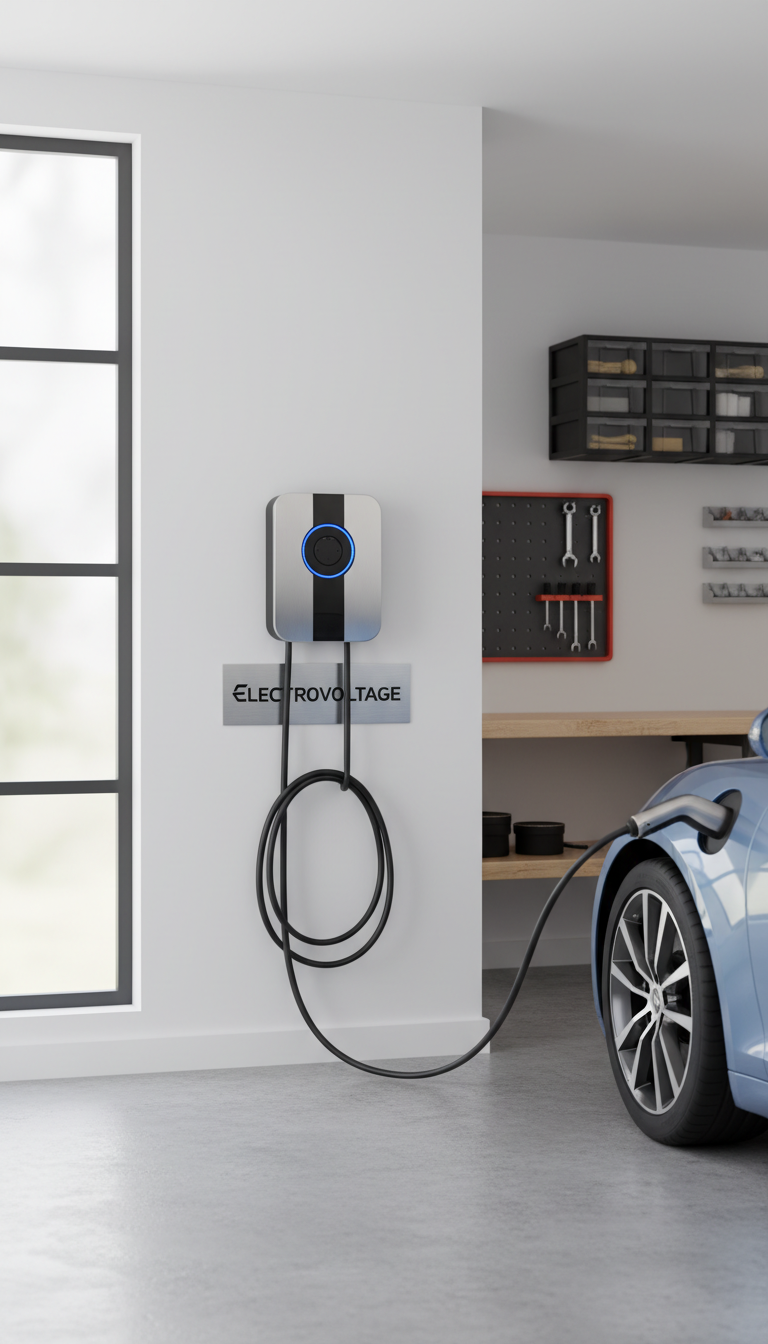
While Level 1 charging via a standard 120V outlet is possible, it provides only a few kilometers of range per hour; this is rarely sufficient for the average GTA commute. A Level 2 station, operating on 240V, is the industry standard for home EV charger installation services. It delivers full charges overnight, ensuring your vehicle is ready for the unpredictable traffic on the 401 or QEW.
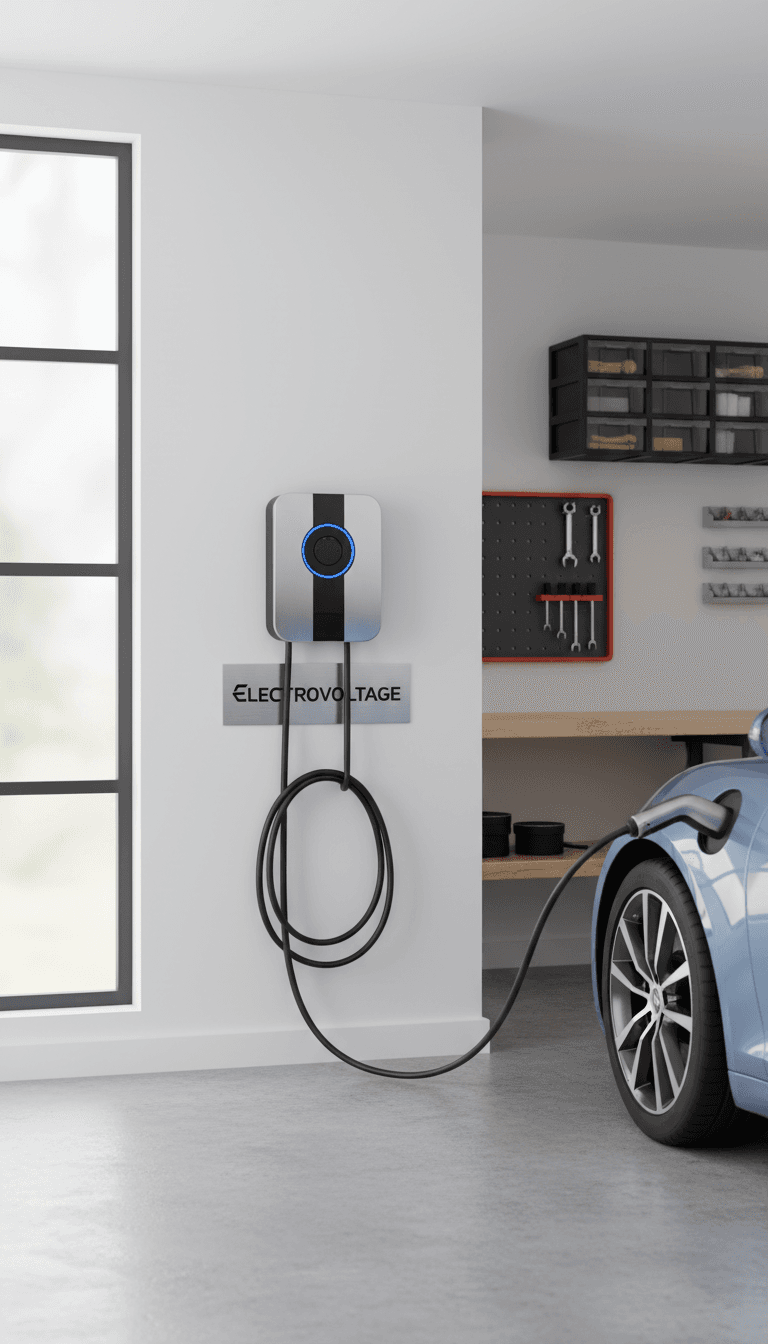
Selecting hardware requires balancing functionality with durability. For Tesla owners, the proprietary Wall Connector offers integrated software features. However, universal chargers like ChargePoint or the Canadian-made Grizzl-E are robust alternatives. The Grizzl-E is particularly well-suited for our local climate, featuring an all-metal enclosure and cables designed to remain flexible in sub-zero temperatures. If your charger will be mounted on a driveway rather than inside a garage, prioritize units with an IP66 or NEMA 4 rating to withstand heavy snow and road salt.
Feature | Hardwired Installation | Plug-in (NEMA 14-50) |
|---|---|---|
Max Amperage | Typically 48A to 80A | Limited to 40A |
Weather Resistance | Superior (sealed connection) | Lower (exposed receptacle) |
Flexibility | Permanent mounting | Portable; easy to replace |
Code Requirement | Standard Breaker | GFCI Breaker required |
Hardwired installations are generally preferred when you install EV charger in Toronto. They offer a more secure connection, support higher amperage for faster charging, and eliminate the risk of nuisance tripping often associated with the GFCI breakers required for NEMA 14-50 outlets.
Step 3: Navigating Ontario ESA Permits and Regulations
Once hardware is selected, the focus shifts from physical components to provincial compliance. In Ontario, adding a dedicated circuit for a vehicle is a regulated activity. The Electrical Safety Authority (ESA) mandates that a permit must be filed before any work commences. This notification ensures that the installation is registered for inspection and meets the rigorous standards of the Ontario Electrical Safety Code.
Under provincial law, only a Licensed Electrical Contractor (LEC) can legally pull a permit and perform electrical work for hire. When you hire Electrovoltage for EV charger installation services, we act as the authorized LEC, managing all administrative filings and scheduling the necessary inspections on your behalf. This professional oversight is the only way to guarantee that your system is compliant with local regulations.
Toronto residents often ask if they are allowed to install their own EV charger. While a homeowner can technically perform work on their own primary residence with a homeowner’s permit, it is a high-risk endeavor. DIY projects often overlook critical technicalities like torque settings for high-voltage terminals or proper conduit support. Beyond safety, there is the matter of liability. Most home insurance policies in the GTA require a Certificate of Inspection from the ESA to validate the installation. If a fire occurs and the work was not performed by an LEC or lacked a final certificate, your provider may deny the claim. Engaging professional residential electrical services provides the legal and financial security required to safely install EV charger in Toronto properties.
Step 4: The Physical Installation and Wiring Process
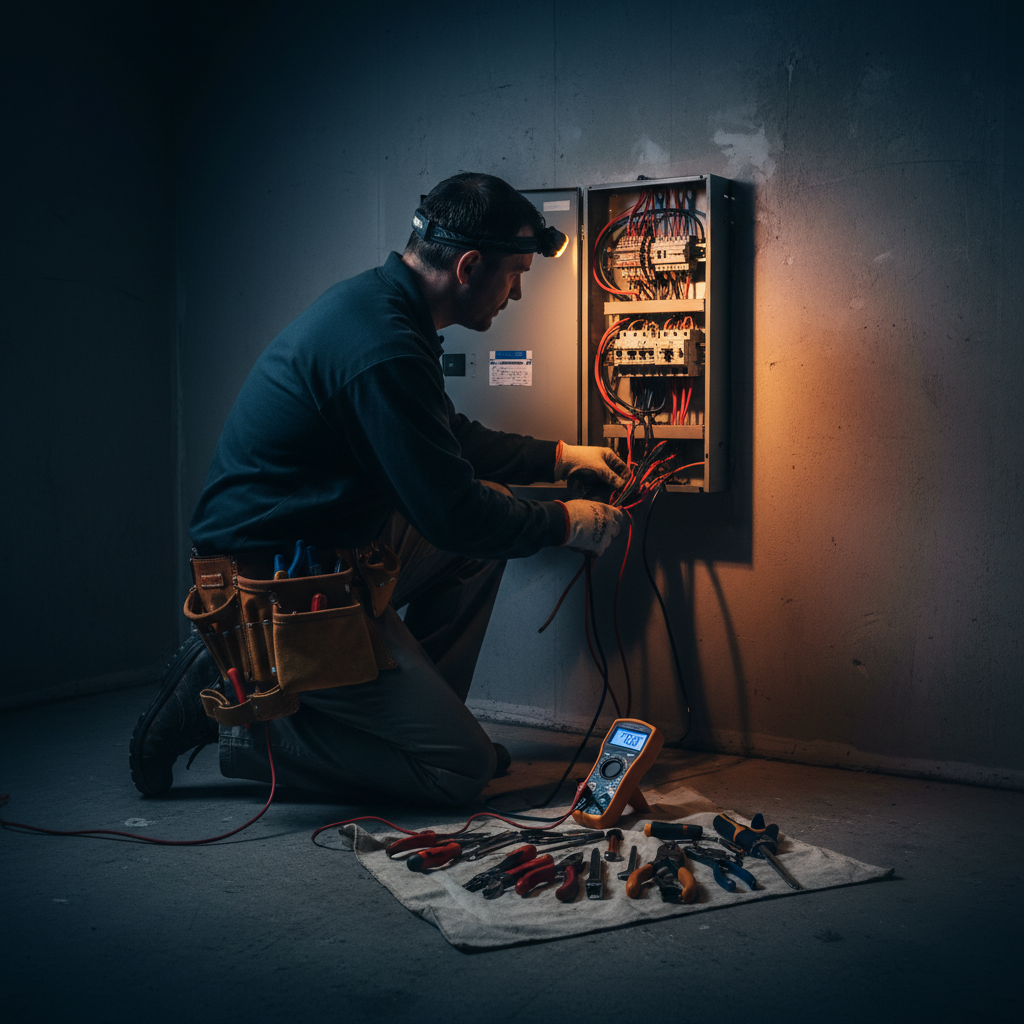
With the permit secured, the physical installation begins by identifying the optimal location for the charging unit. Placement is determined by the vehicle's charge port location, which varies by manufacturer. For instance, many Tesla models have the port near the rear driver side taillight, while many non-Tesla brands place it at the front. The goal is to ensure the charging cable reaches the vehicle without creating a tripping hazard across walkways or requiring excessive tension on the cord.
For a garage installation, we typically mount the unit to a wall stud and run Electrical Metallic Tubing (EMT). This thin walled steel conduit provides superior physical protection for the conductors. If the installation is on a driveway or an exterior brick wall, we use Schedule 40 PVC or liquid tight conduit to protect against Ontario's seasonal moisture and temperature shifts.
The technical wiring involves pulling specific gauges based on the charger’s amperage requirements. For a 48-amp charger on a 60-amp circuit, we pull 6 AWG copper wire. A 32-amp charger usually requires 8 AWG. In many Toronto properties where a full panel upgrade in Toronto is not immediately feasible due to utility constraints, we integrate an Electric Vehicle Energy Management System (EVEMS). This smart device monitors the home's total electricity usage in real time. If you turn on the oven and the dryer while the car is charging, the EVEMS automatically throttles or pauses the EV load to prevent the main breaker from tripping. This technology is a cornerstone of modern EV charger installation services for older GTA homes, allowing residents to safely install EV charger in Toronto without a complete service overhaul. These residential electrical services ensure your home remains safe while providing the fastest possible charge.
Step 5: Final Inspection and Toronto Hydro Considerations
Once the physical wiring is complete and the unit is securely mounted, our technicians conduct a comprehensive system test. This includes verifying the current flow, checking for firmware updates, and ensuring your vehicle communicates correctly with the charger. However, the legal completion of the project rests with the Electrical Safety Authority. An ESA inspector will visit your property to review the work, ensuring it aligns with the permit pulled at the start of the job.
This inspection results in an ESA Certificate of Acceptance. You should keep this document in your permanent records; it serves as official proof for your insurance provider that the electrical work was performed by a Licensed Electrical Contractor and meets provincial safety standards. Without this certificate, you may face complications with future insurance claims or property appraisals during a sale.
Rate Plan | Charging Window | Benefit |
|---|---|---|
Ultra-Low Overnight (ULO) | 11:00 PM – 7:00 AM | Lowest possible cost per kWh |
Time-of-Use (TOU) | Off-Peak (Weekends/Nights) | Standard savings for off-peak use |
Maximizing the value of your EV charger installation services involves coordinating with your utility provider, such as Toronto Hydro or Alectra Utilities. By switching to the Ultra-Low Overnight (ULO) rate plan, many residents can charge for pennies per kilowatt-hour. This specific tier is designed to encourage off-peak usage, allowing you to fill your battery overnight when the grid demand is lowest. This strategy, often paired with a necessary panel upgrade in Toronto, ensures you safely install EV charger in Toronto homes while minimizing the impact on your monthly utility bill.
Current Costs and Rebates for Toronto Homeowners in 2026
Understanding the financial commitment is essential for budgeting your transition to electric mobility. For a standard installation in the GTA, homeowners should anticipate three primary cost categories. Charger hardware typically ranges from $600 to $1,200, depending on features like smart connectivity or higher weather resistance ratings. Professional labor, inclusive of materials like conduit and wire along with the mandatory ESA permit, generally falls between $800 and $2,000 for standard EV charger installation services.
Investment Component | Estimated Cost (2026 CAD) |
|---|---|
Level 2 Charger Hardware | $600 – $1,200 |
Professional Installation & Permits | $800 – $2,000 |
Panel Upgrade in Toronto (if required) | $2,500+ |
If your home requires a service increase to 200A, the project total will increase. This is a common requirement for older properties in Markham or downtown Toronto where existing panels are at capacity. While this is a larger upfront cost, it represents a permanent improvement to the property's infrastructure that supports all future residential electrical services.
Regarding financial assistance, there are currently no provincial rebates for residential charger installations in Ontario for 2026. However, federal incentives like the iZEV program continue to provide up to $5,000 off the purchase price of the electric vehicle itself. When you choose to install EV charger in Toronto neighborhoods, the long term savings on fuel and the boost to property value often outweigh these initial setup costs.
Why Hire a Licensed Electrical Contractor in Toronto
Navigating the technical requirements of the Ontario Electrical Safety Code requires more than general knowledge; it demands local proficiency. Selecting a Licensed Electrical Contractor (LEC) ensures that your project complies with the specific building codes found in Toronto and Markham. At Electrovoltage, we understand the nuances of the local grid and the unique architectural constraints of GTA homes. This expertise is vital when determining if a panel upgrade in Toronto is necessary to accommodate a high draw appliance without compromising your existing system.
Professional EV charger installation services provide three core benefits: safety, speed, and security. Our team ensures that every connection is torqued to manufacturer specifications, preventing the heat buildup that can cause electrical fires. We also optimize your system for the highest possible charging speeds supported by your vehicle. By choosing a professional to install EV charger in Toronto residences, you secure a valid ESA certificate, protecting your equipment warranties and maintaining your home insurance eligibility. These residential electrical services offer the long term reliability and peace of mind that DIY approaches simply cannot match.
Preparing your Toronto home for an electric vehicle involves careful planning around your electrical panel and local safety standards. While this guide provides the foundation for a successful setup, the complexities of high-voltage installations require precision. If you want expert help navigating the technical details or local permits, connecting with a professional is a sensible choice. Experts who focus on EV Chargers can ensure your system is optimized for performance and safety, making the entire transition to electric driving seamless and stress-free.