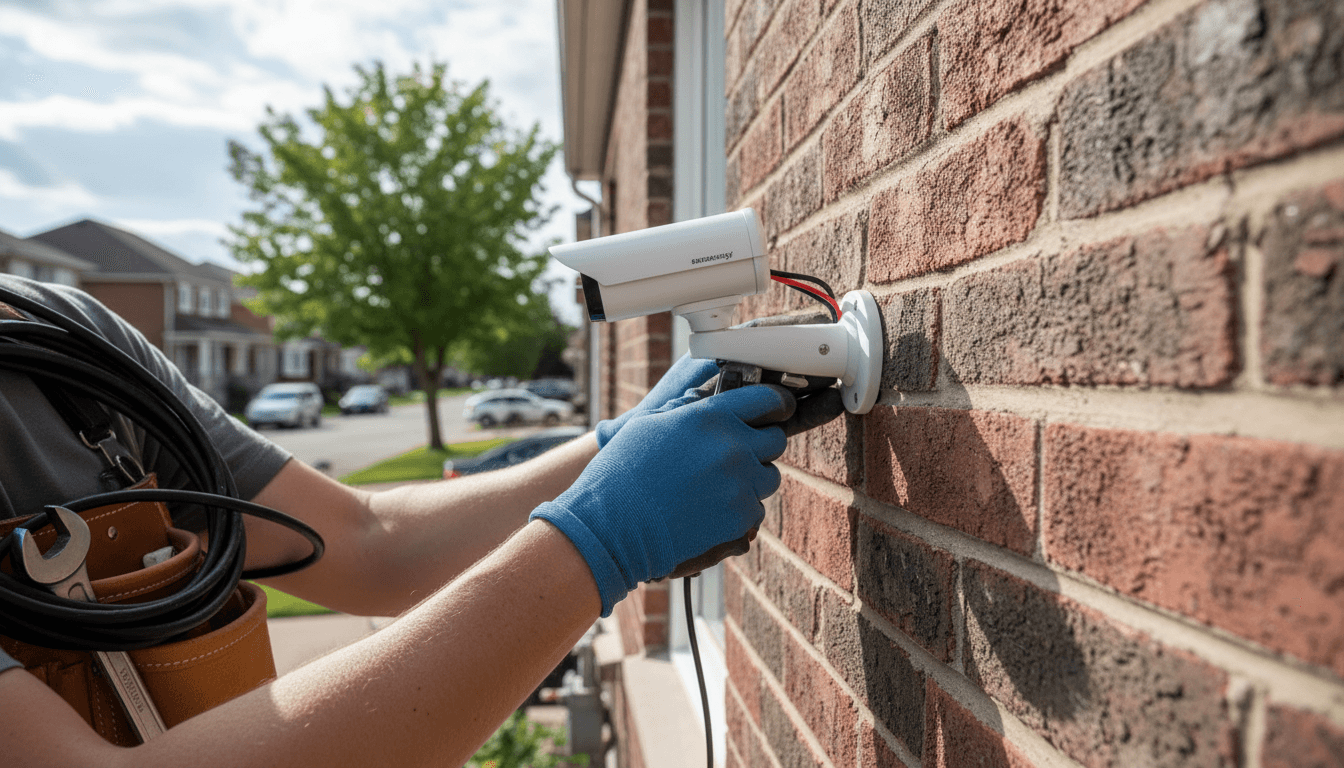

Professional fire alarm installation Toronto requires strict adherence to the Ontario Fire Code, which mandates functional smoke alarms on every storey and outside all sleeping areas. Additionally, property owners must install carbon monoxide alarms near fuel-burning appliances and utilize licensed, certified electricians to ensure all systems meet legal safety standards.
Navigating the shifting landscape of the Ontario Fire Code can feel like an overwhelming task for any Toronto property owner. Whether you are managing a commercial facility in the GTA or upgrading a residential property, the risk of non-compliance brings legal liabilities and significant safety concerns. With the province moving toward stricter standards for 2026; understanding your obligations is no longer optional. This guide breaks down the essential requirements for fire alarm installation in Toronto, from the nuances of hardwired versus wireless interconnected systems to the specific mandates for commercial spaces. You will learn exactly how to ensure your building remains compliant, why professional installation is necessary for insurance purposes, and what to expect regarding costs and maintenance schedules. We provide the technical clarity required to protect your assets and maintain total peace of mind.
Fire Alarm Requirements in Toronto and Ontario
Compliance with the Ontario Fire Code (O. Reg. 213/07) is a fundamental legal obligation for every property owner in the Greater Toronto Area. The code mandates an "every storey" rule, which requires a functioning smoke alarm on every level of a residential dwelling, including basements. Beyond mere presence, the code specifies that alarms must be installed outside all sleeping areas, specifically within 5 metres of any bedroom door. This precise placement ensures the signal is audible enough to wake occupants during an emergency.
Understanding the distinction between smoke and carbon monoxide (CO) alarms is essential for comprehensive residential electrical services. While smoke alarms detect particles of combustion, CO alarms are mandatory in any home that contains a fuel-burning appliance, such as a gas furnace, water heater, or fireplace, or has an attached storage garage. According to data from the Ontario Fire Marshal, working smoke alarms significantly increase the chances of survival, yet many residential units still lack properly maintained devices.
For homeowners considering professional fire alarm installation services, it is important to note that Toronto’s local bylaws mirror provincial standards but are enforced with high scrutiny during property sales and major renovations. City inspectors and insurance providers frequently require documented proof of compliance before a property transfer is finalized or a building permit is closed. Ensuring your fire alarm installation Toronto project meets these specific distance and placement metrics is the only way to guarantee both legal compliance and the safety of your household.
Hardwired vs Wireless Interconnected Smoke Alarms

Achieving compliance with these location requirements is only the initial step; the method of communication between units is equally critical for modern life safety. Interconnection ensures that if one alarm detects a threat, every alarm in the building sounds simultaneously. This is particularly vital in multi-storey Toronto homes where a fire starting in a basement laundry room or furnace area might not be audible from a third-floor bedroom until the smoke has already compromised the primary exit routes.
Traditionally, interconnection required a physical communication wire to be run between every unit in the house. This remains the gold standard during new construction or when a home is undergoing a comprehensive electrical panel upgrade where walls are already open. However, the 2024 Ontario Building Code (OBC) updates now provide clearer pathways for the use of wireless interconnection technologies in residential retrofits. These wireless mesh systems allow units to communicate via radio frequency, creating a reliable safety network without the need for invasive structural wiring through lath and plaster or finished drywall.
Feature | Hardwired Interconnection | Wireless Interconnected (Mesh) |
|---|---|---|
Power Source | Constant 120V with battery backup | 10-year sealed lithium or 120V |
Communication | Physical 14/3 or 12/3 signal wire | Radio frequency (RF) signals |
Best For | New builds and major renovations | Retrofits and older Toronto homes |
Reliability | Highest; immune to signal interference | High; requires ULC-listed equipment |
For many fire alarm installation Toronto projects, the choice depends on the existing infrastructure of the property. While hardwired systems offer a permanent, low-maintenance solution, wireless mesh technology has become the modern safety standard for GTA homeowners looking to update older properties. Both methods satisfy the core safety objective: ensuring that a localized incident triggers a house-wide alert, providing those extra seconds of early warning that are often the difference between a safe evacuation and a tragedy.
Understanding the New Ontario Smoke Alarm Requirements 2026
Staying ahead of regulatory shifts is essential for long-term safety and property value. The upcoming 2026 Ontario requirements represent a significant move toward inclusive safety standards; specifically, the transition toward mandatory visual signaling. In many new residential configurations and substantial renovations, smoke alarms will soon be required to include strobe lights. This visual alert ensures that individuals with hearing impairments are notified instantly, bringing residential standards closer to the rigorous protocols found in commercial electrical solutions.
Furthermore, the tightening of Carbon Monoxide (CO) alarm rules for older buildings is a priority for the 2026 rollout. Properties built before modern CO mandates are now facing stricter enforcement regarding the proximity of sensors to fuel-burning appliances and sleeping areas. To future-proof a home now, it is advisable to select dual-sensor units that feature both smoke and CO detection, integrated with visual strobe capabilities. Choosing high-specification equipment during a current fire alarm installation Toronto ensures you will not need to retrofit your system again when these codes become fully mandatory. By integrating these advanced devices into your residential electrical services plan, you ensure compliance with both the current Ontario Fire Code and the impending 2026 updates.
Commercial Fire Alarm Systems for GTA Businesses

Transitioning from residential safety to commercial property requirements introduces a significant increase in technical complexity and regulatory oversight. Unlike residential smoke alarms, which typically function as localized warning units, commercial electrical solutions involve integrated life safety networks. These systems are designed to manage high-occupancy environments and must provide rapid, building-wide notification while pinpointing the exact location of a triggered device to emergency responders.
Commercial systems rely on a variety of specialized components that go beyond simple smoke detection. A standard installation for a Markham or Toronto business typically includes:
Manual Pull Stations: Strategically located at exits to allow occupants to trigger an alarm immediately.
Heat Detectors: Essential for environments like commercial kitchens or storage facilities where smoke detectors might cause frequent nuisance alarms.
Central Monitoring: A dedicated connection that automatically alerts the fire department the moment a signal is received by the control panel.
Notification Appliances: A synchronized network of horns, bells, and strobes to ensure all occupants, including those with visual or hearing impairments, are notified.
Compliance is governed by strict inspection protocols. Ontario Fire Code Division B Section 2.16 mandates that these systems be maintained in peak operating condition. Testing must adhere to the CAN:ULC-S536 standard, which dictates the frequency and methodology for inspecting every device in the loop. Electrovoltage works closely with property managers and business owners across the GTA to manage these requirements. By handling professional fire alarm installation Toronto projects and ongoing maintenance, we ensure that facilities remain compliant with provincial law and that all test records are documented for fire marshal inspections.
Why Hire a Licensed Electrician for Fire Alarm Installation
Ontario law is definitive regarding electrical work: handymen are not legally permitted to perform electrical installations, especially those involving life-safety systems. For any fire alarm installation Toronto project, the Electrical Safety Authority (ESA) requires the work to be completed by a Licensed Electrical Contractor (LEC) holding an ECRA/ESA license. This regulation exists to ensure that systems protecting your life are installed to the highest safety standards.
A professional electrician brings technical precision that goes beyond simply connecting wires. We analyze the dwelling to avoid "dead air" spaces, which are pockets near ceiling corners where smoke may not circulate effectively, delaying detection. We also ensure that alarms are strategically placed to avoid nuisance tripping; installing a detector too close to a high-humidity bathroom or a kitchen stove leads to false alarms that often cause residents to disconnect the units entirely, creating a massive safety risk.
Furthermore, licensed residential electrical services provide the critical documentation required for your property. We handle the necessary ESA permits and provide a Certificate of Inspection upon completion. This paperwork is often a non-negotiable requirement for insurance providers to validate a home policy and for municipal inspectors when issuing occupancy permits during renovations or new builds.
Fire Alarm Installation Cost and Maintenance in Toronto

The investment for fire alarm installation Toronto varies based on the architecture and age of the property. In a new construction project, wiring is straightforward and integrated during the framing stage. Conversely, retrofitting an older home in neighborhoods like High Park or Cabbagetown often involves fishing wires through lath and plaster, which is significantly more labor intensive than working with modern drywall. Professionals must also factor in the cost of ESA permits and the specific number of units required to satisfy the every storey rule.
Cost Factor | Impact on Pricing |
|---|---|
Number of Storeys | Higher storey counts require more devices and longer wire runs. |
Wall Material | Plaster retrofits involve higher labor costs than drywall. |
Device Type | Combined Smoke/CO units are more expensive than single-sensor units. |
Interconnection | Wireless mesh units reduce labor costs but have higher unit prices. |
Maintenance is not just a safety recommendation; it is a requirement under the Ontario Fire Code. For residential electrical services, we advise homeowners to follow this rigorous schedule:
Monthly: Press the test button to ensure the audible signal and power connection are active.
Annually: Replace 9V backup batteries, unless the devices use 10-year sealed lithium batteries.
Decennially: Replace the entire unit every 10 years from the date of manufacture, as sensors degrade and lose sensitivity over time.
Following these steps ensures your fire alarm installation services remain compliant with provincial law while providing the necessary documentation for insurance and liability purposes.
Common Locations for Fire Alarm Placement in Modern Homes
Precise placement ensures sensors detect smoke before it reaches critical levels. During a professional fire alarm installation Toronto, units are positioned to avoid "dead air" pockets where smoke may not circulate. On flat ceilings, always mount alarms at least 4 inches (10 cm) away from side walls. If wall mounting is the only option, the device should sit between 4 and 12 inches below the ceiling line.
Strategically avoid locations within 3 feet of ceiling fans, air vents, or high-flow returns, as moving air can blow smoke away from the sensor. To prevent the nuisance tripping often addressed during residential electrical services, keep devices at least 10 feet from kitchen appliances and away from bathroom doors where steam can trigger false alerts. These technical standards maximize response time and ensure your safety system functions as intended.
Adhering to the Ontario Fire Code is a vital step in safeguarding your property and ensuring the wellbeing of everyone inside. While understanding these regulations is important, the technical demands of a compliant system can be overwhelming. If you want expert help navigating these standards, the team at Electrovoltage is ready to provide professional guidance. We can manage your Fire Alarm needs with precision, making the process straightforward and helping you achieve total peace of mind for your home or business.